+ Streetscapes
University of Toronto Walkways
+ BIRCH WALKWAYS
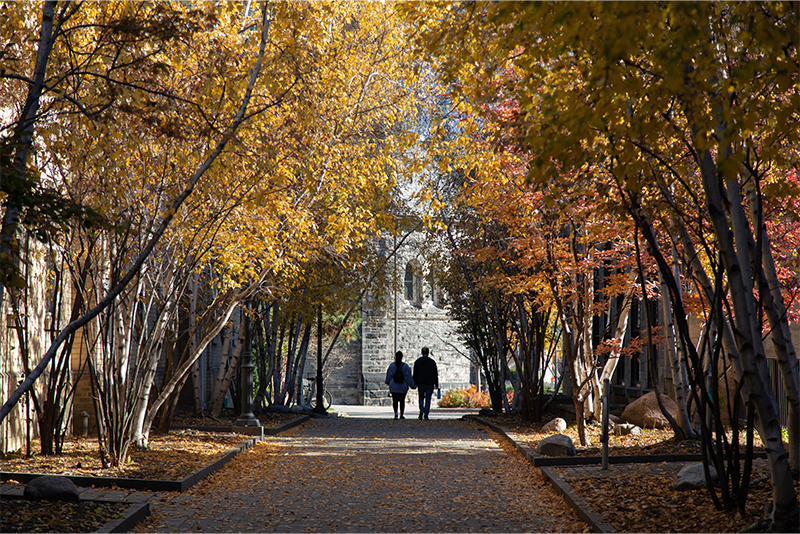
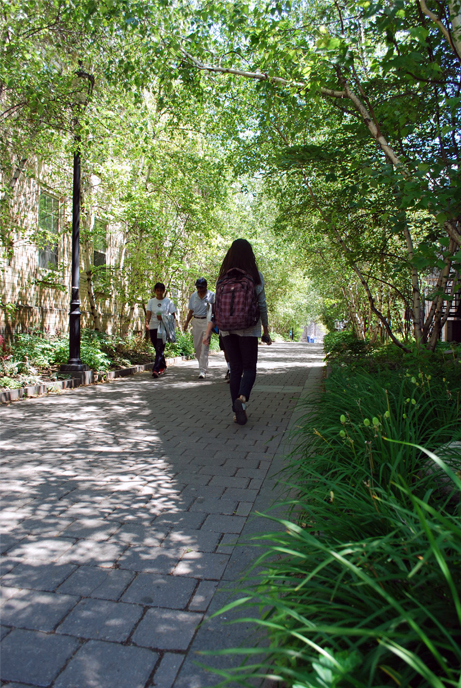
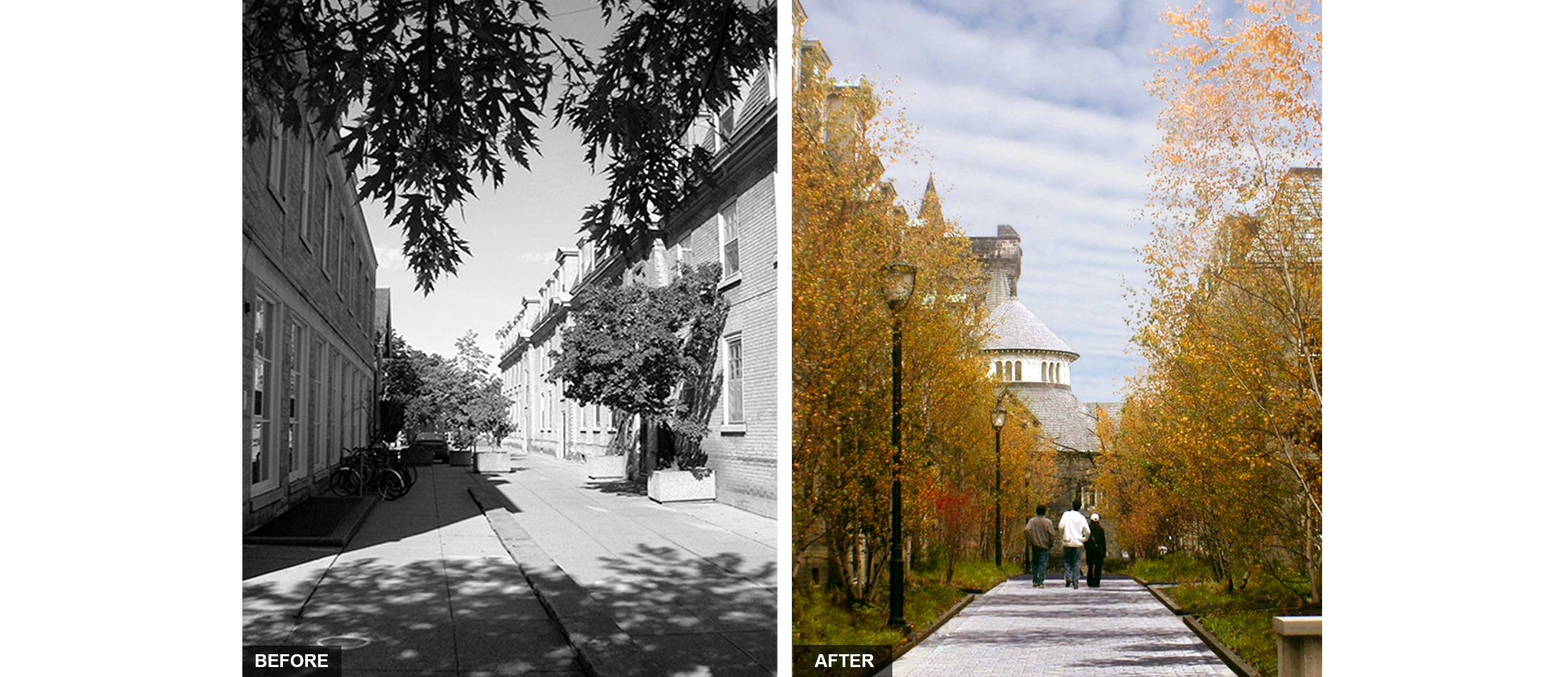
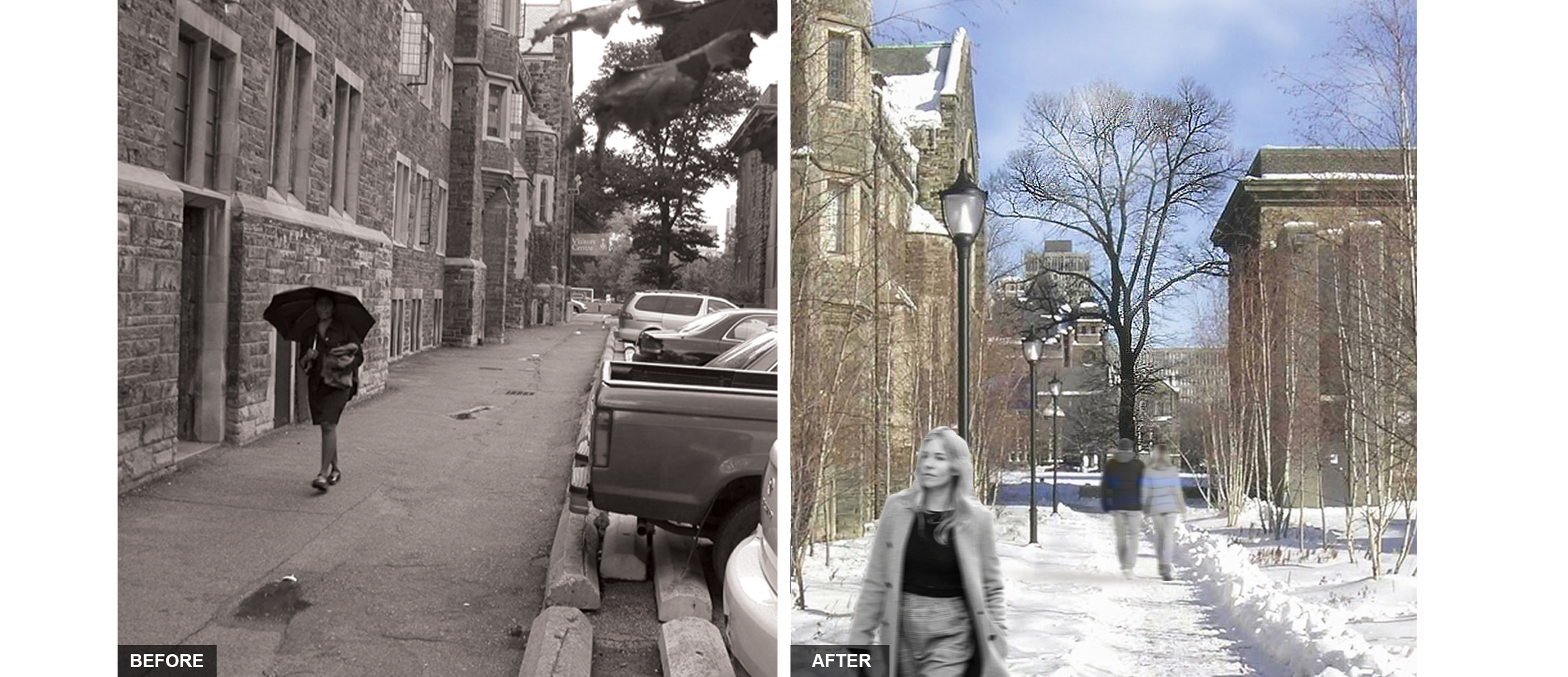
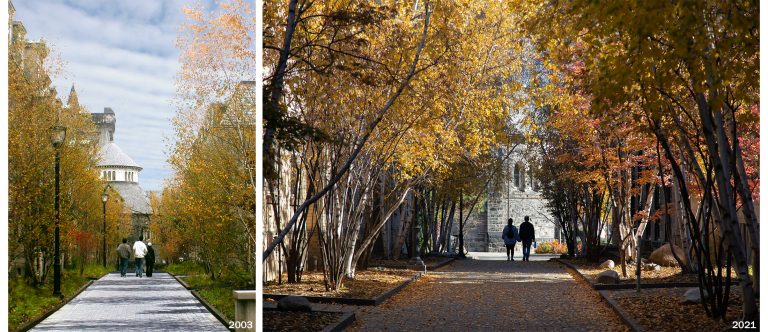
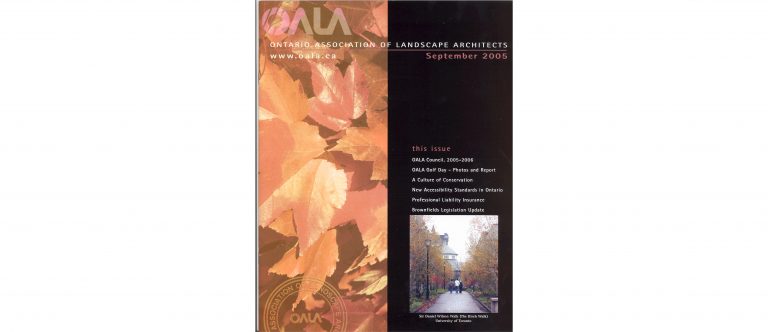
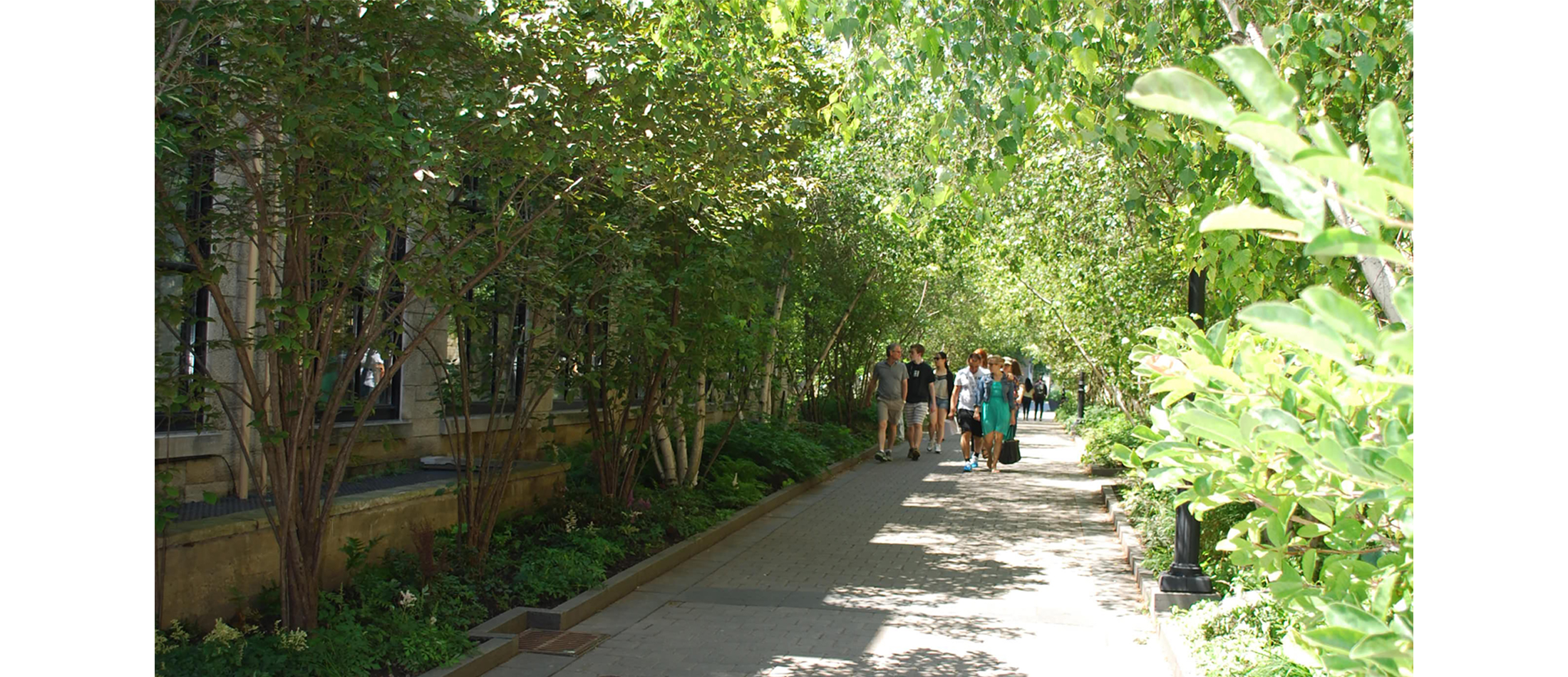
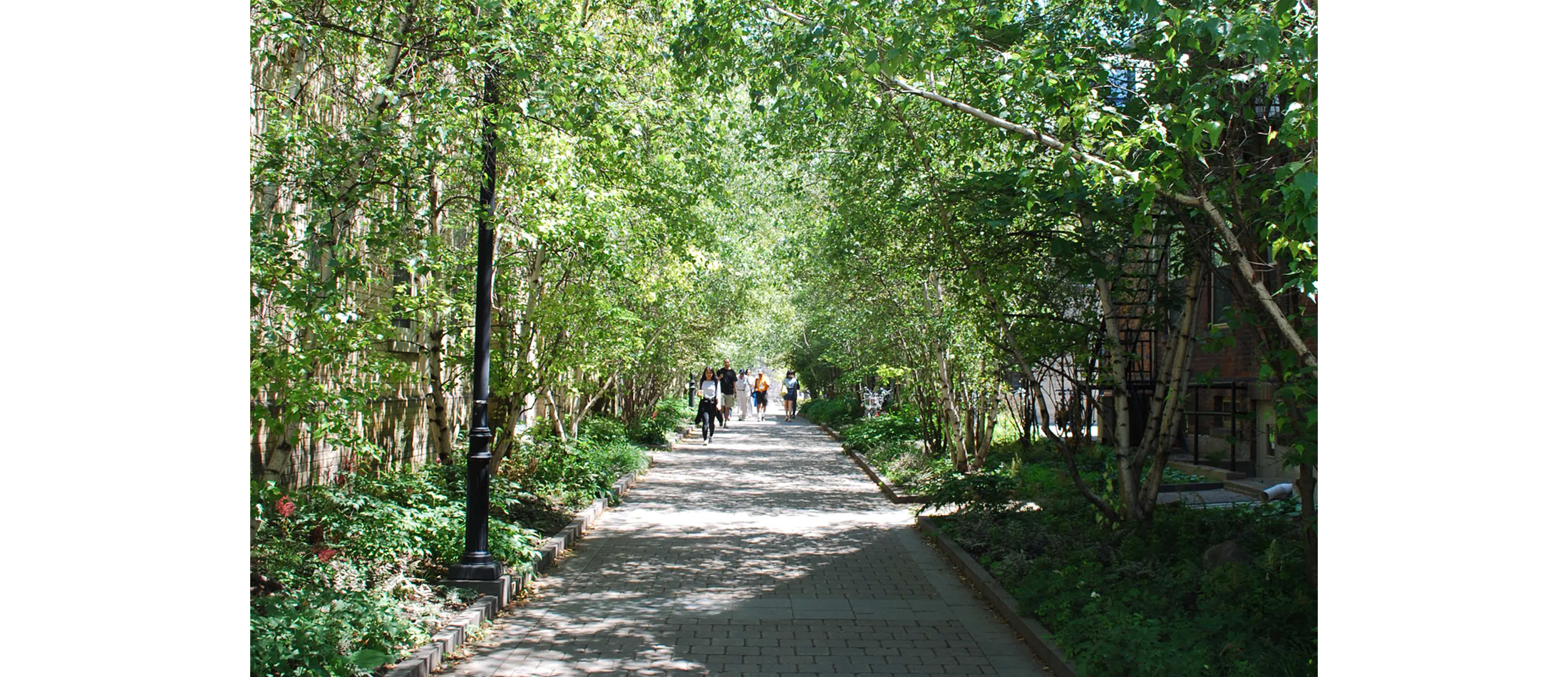
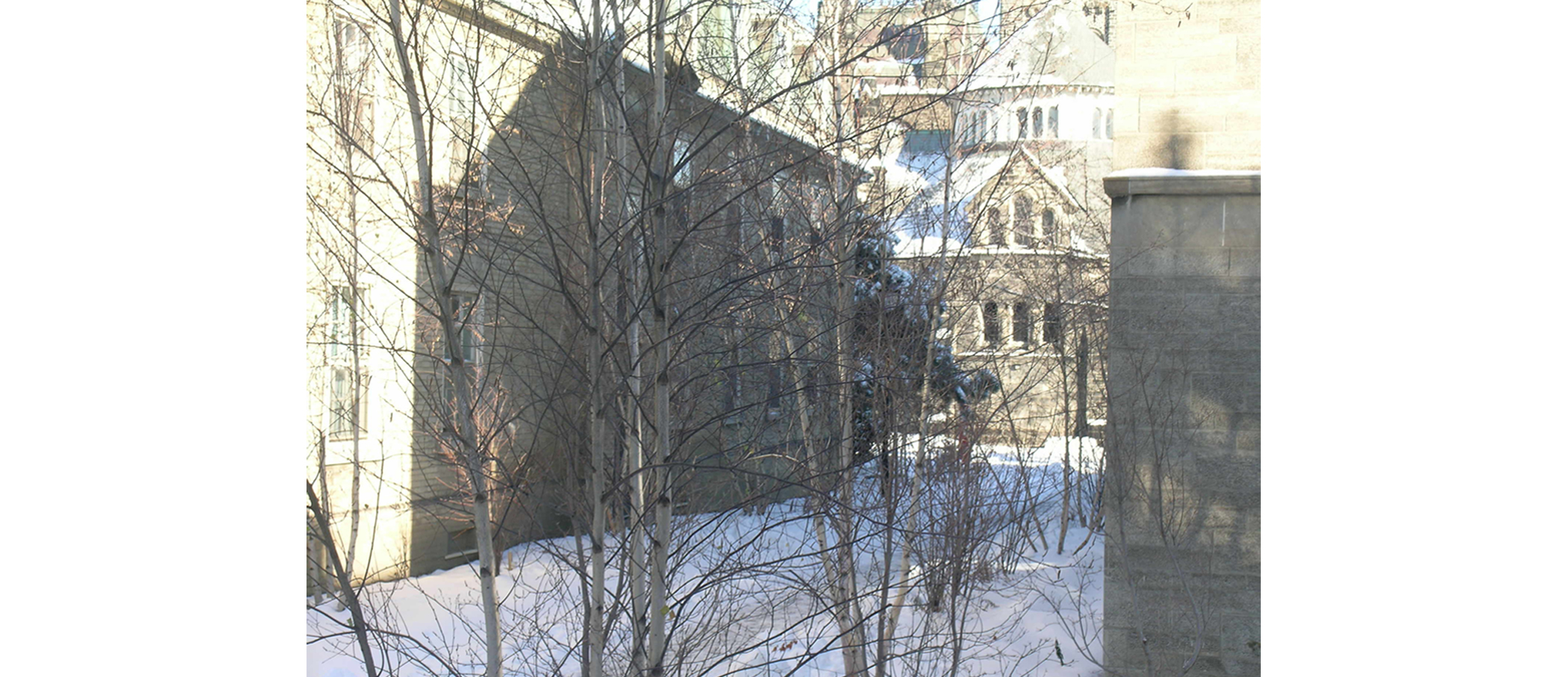
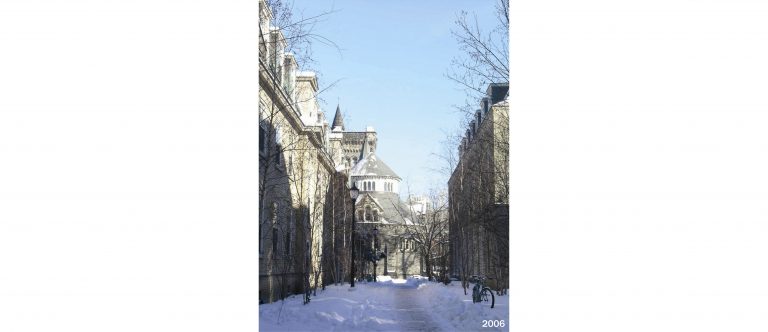
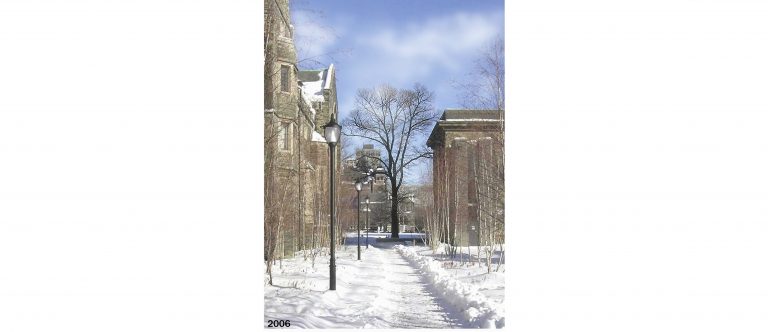
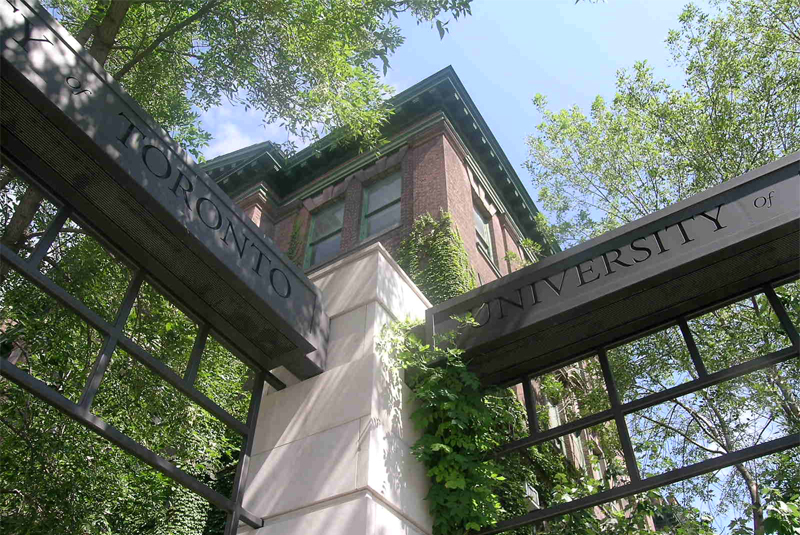
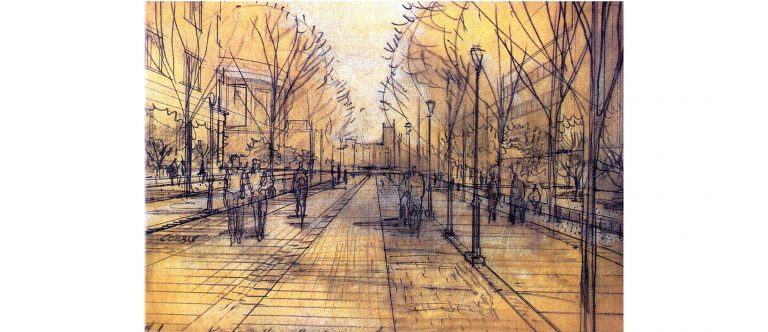
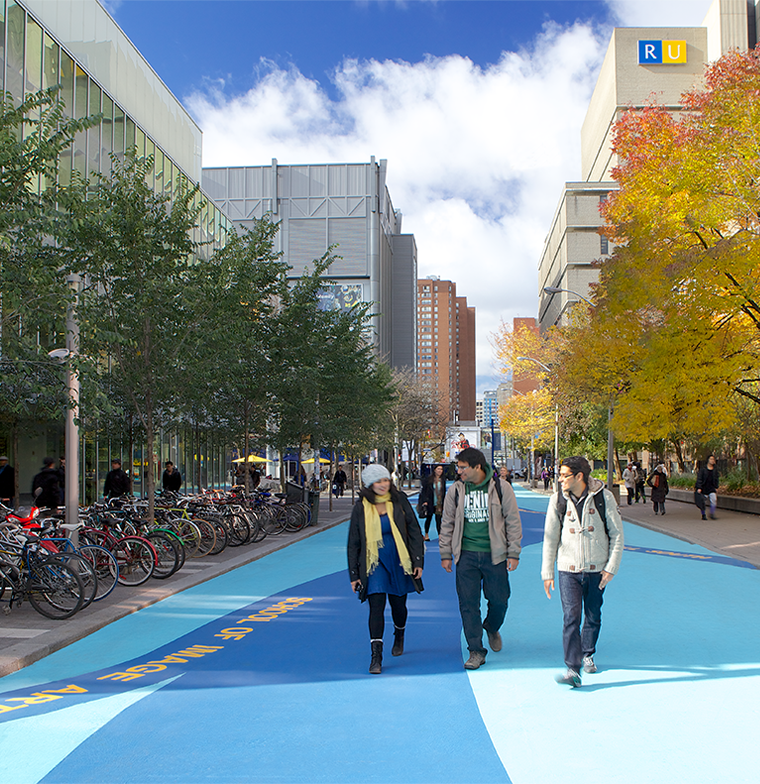
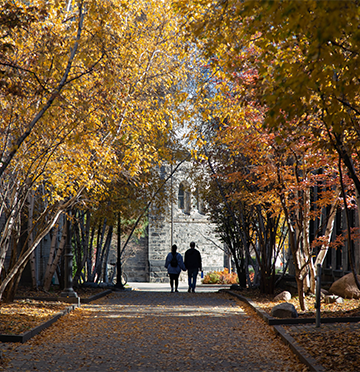
“The walkway that I mention was a nondescript passage – part path, part road – that connects St. George Street to the main campus of the University of Toronto. Last fall, it was suddenly closed off for reconstruction… However, it has recently been reopened and the transformation is remarkable… banks of Birches have turned what was perfectly functional and perfectly ordinary into something beautiful… I was struck; as I stood watching the passers-by take pleasure in the shimmering play of light on the birch trees.” -David MacFarlane, Globe and Mail These secondary entrance walkways into the historic central green of the University of Toronto campus became the connection between the historic campus and the newer campus built in the 1960’s. The client requested that the walkways which were back end delivery routes become true pedestrian walkways. The major objective was to increase pedestrian circulation. The concept of a Birch Walk would provide a respite from the density and noise of the busy adjacent arterial roadway. The new walkways would increase the pleasure of walking and become an inviting entrance into the center of the historic campus. Award – Annual Best of Canada Design Award, Canadian Interiors (2007)
- Related Projects
-
+ Streetscapes
University of Toronto Alumni Gates
-
+ Streetscapes
University of Toronto Kings College Road

+ Project Details
Thomas L. Wells Public School

+ TWO COURTYARDS
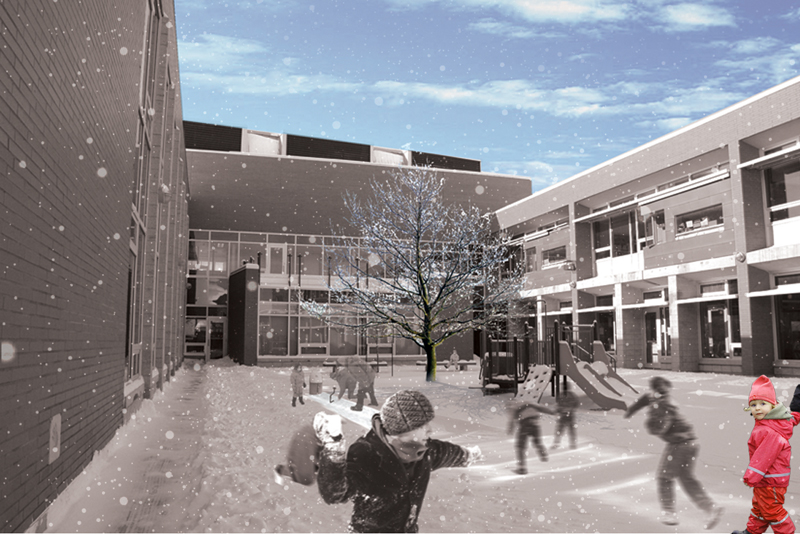
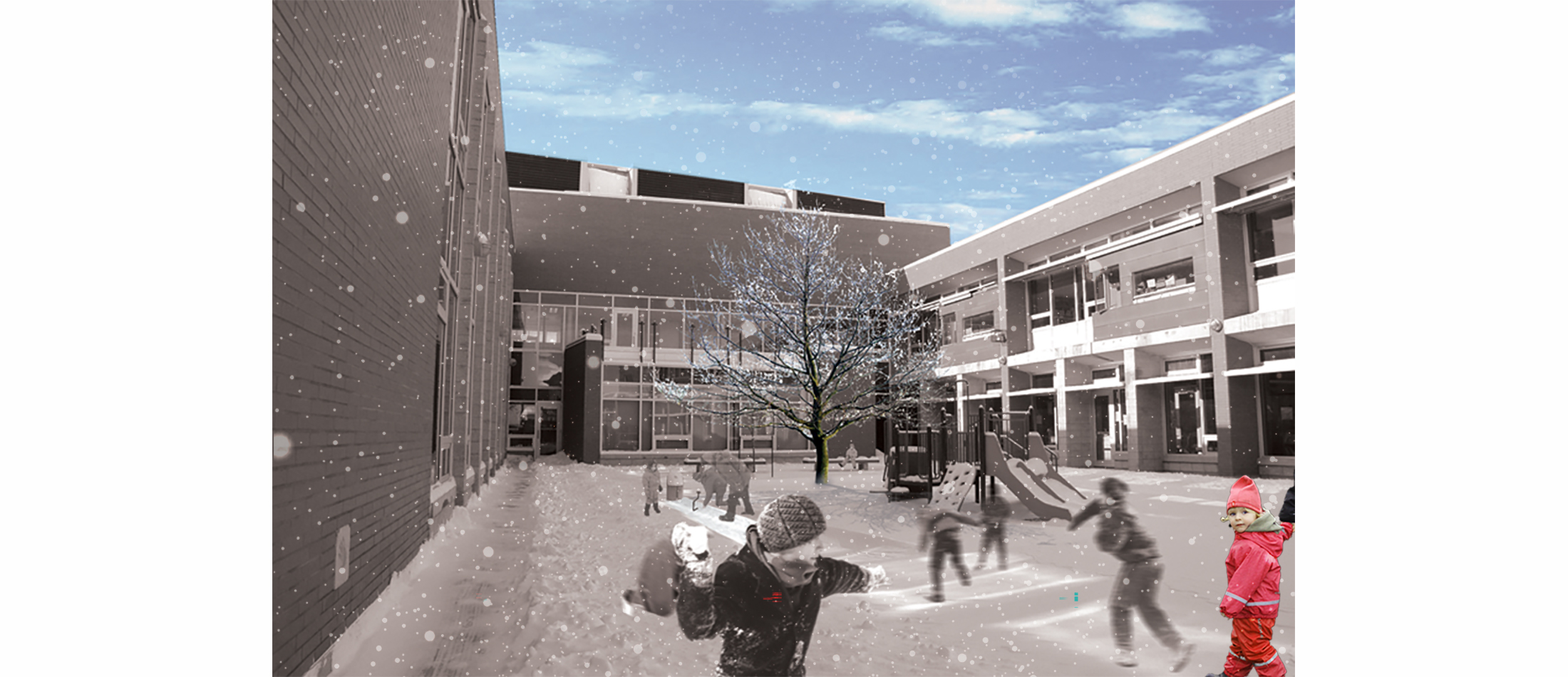
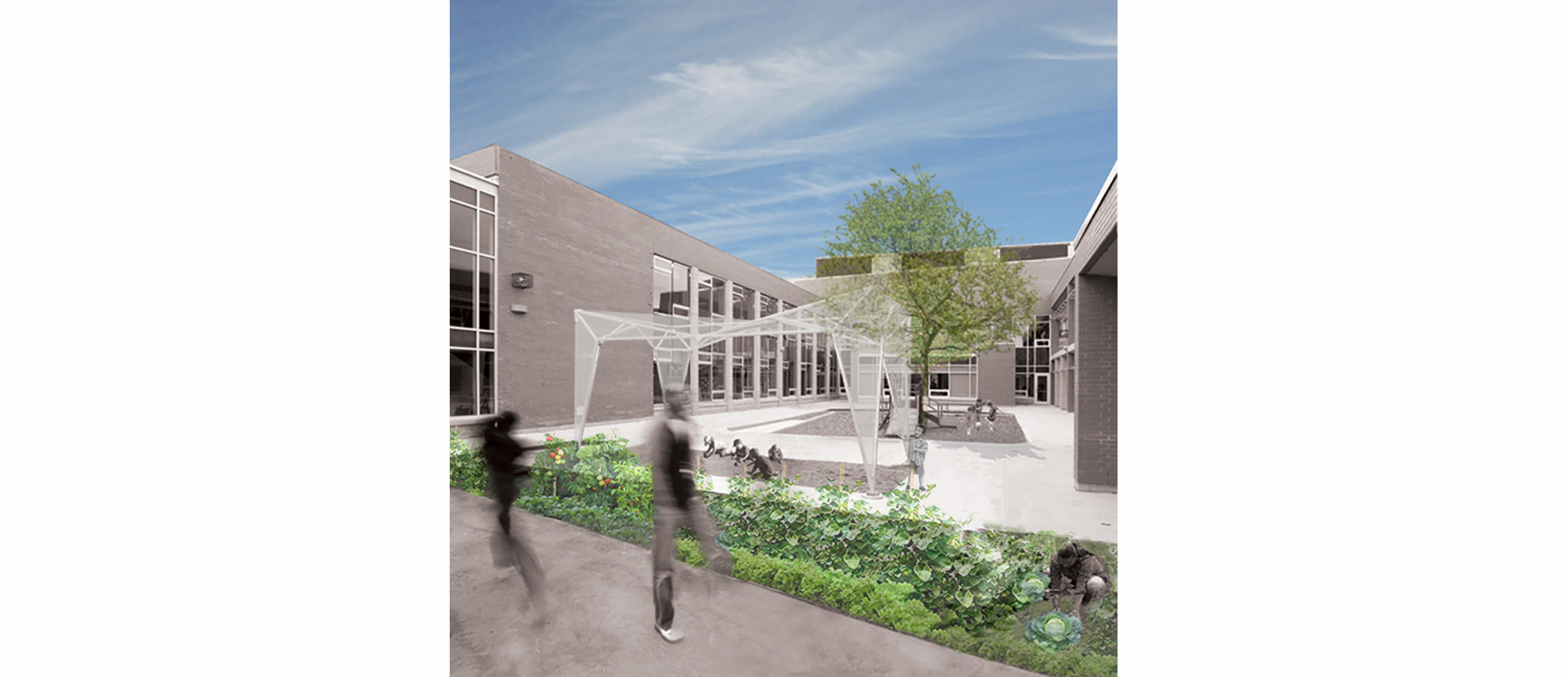
This is the first prototypical green school for the Toronto District School Board. In conjunction with R.V. Anderson, the firm devised a new sustainable environmental approach to groundwater recharge for the courtyards, path systems, playing fields, and parking lots. This method is applicable to all urban conditions where excessive run off is an issue. This was done through the use of groundwater infiltration zones that manifests itself in design features and encourages co-operative maintenance, and planting of gardens by the students. Simultaneously the students learn about the water cycle and conservation.
“An admirable design that creates a rich variety of interior and exterior spaces for children and a public focus for a new community. This project breaks free of the traditional finishes and systems that have been mandated up to now by the Toronto District School Board and sets a new model for environmentally responsible design by school boards.”
Canadian Architect
Awards – AIA Award of Excellence (2008), Award of Excellence, Toronto Architecture and Urban Design Awards (2007), LEED Canada NC-1.0 Silver (2006), Award of Excellence, Canadian Architect (2005)

+ Streetscapes
University of Toronto Kings College Road
+ A CEREMONIAL CORRIDOR
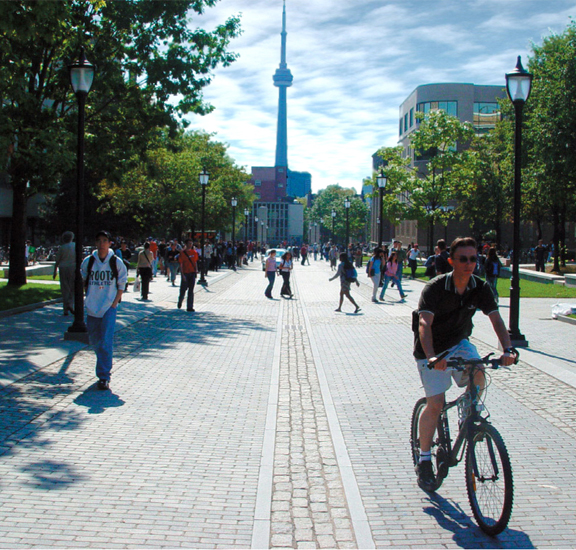
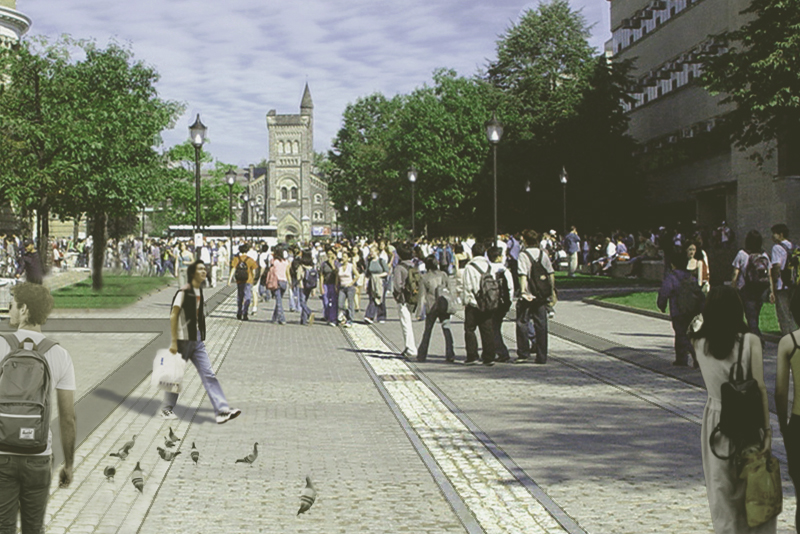
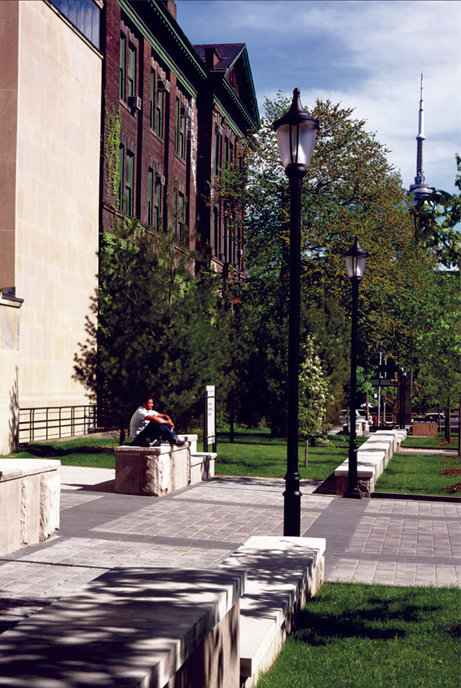
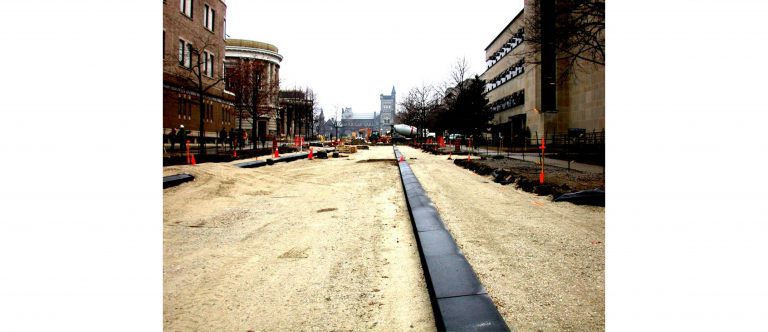
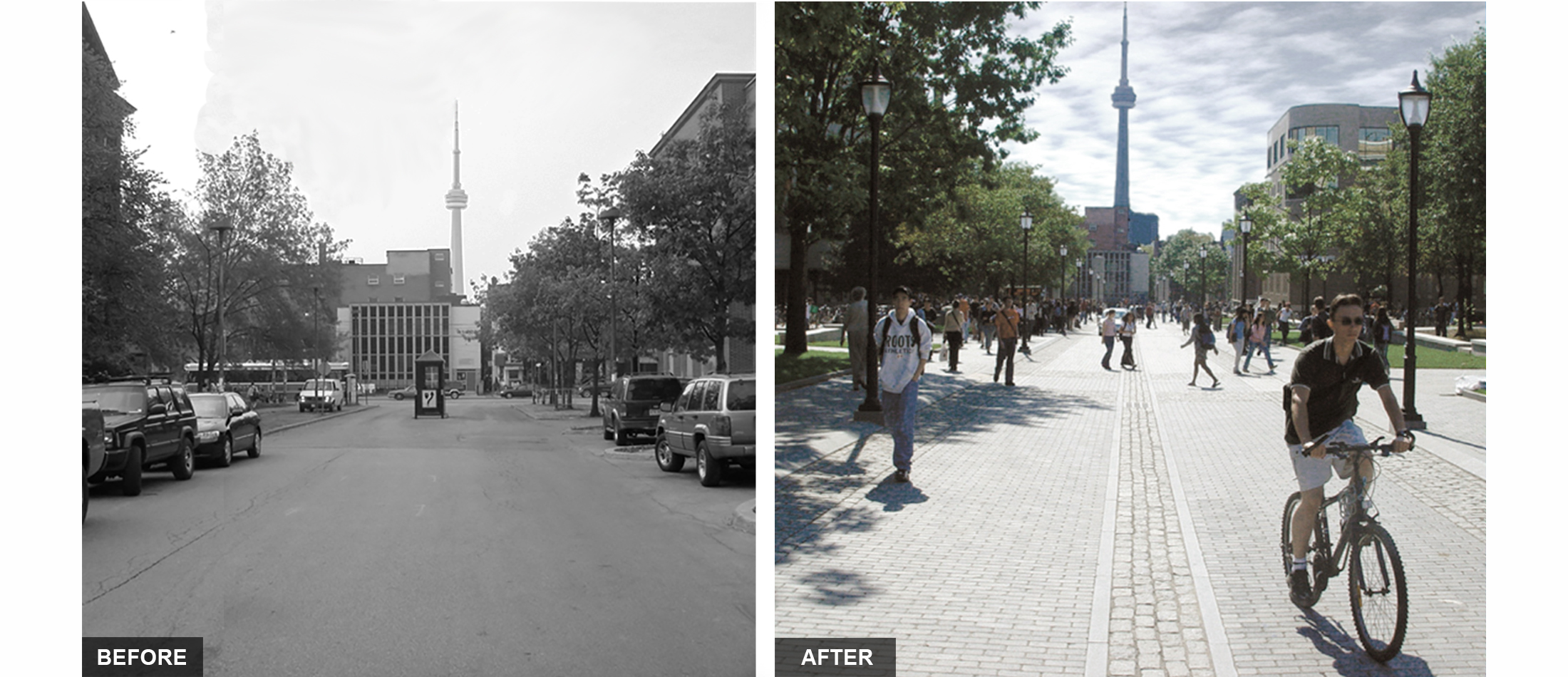
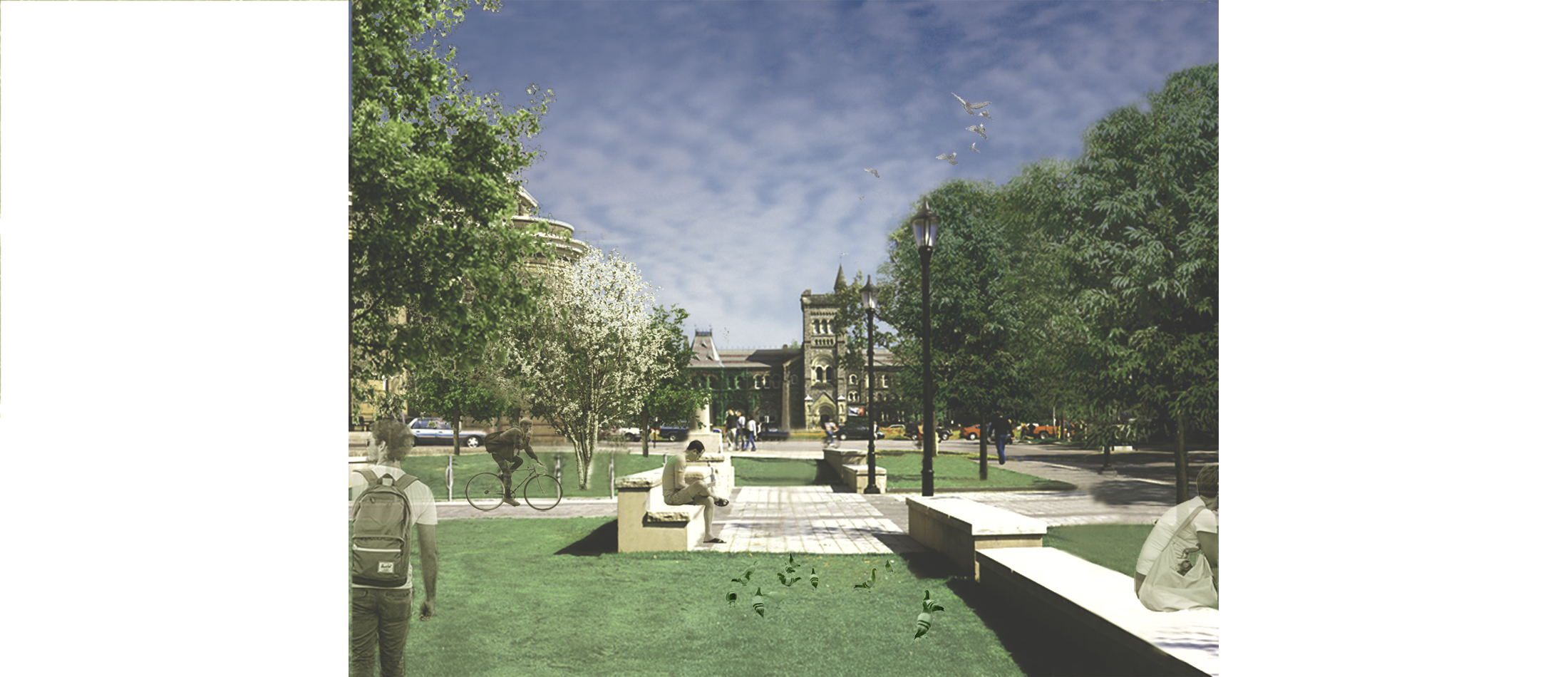
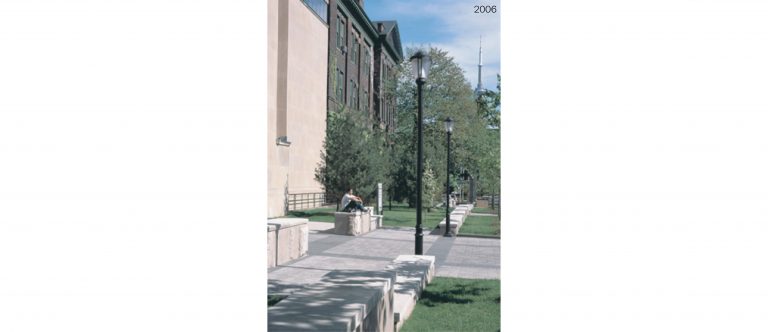
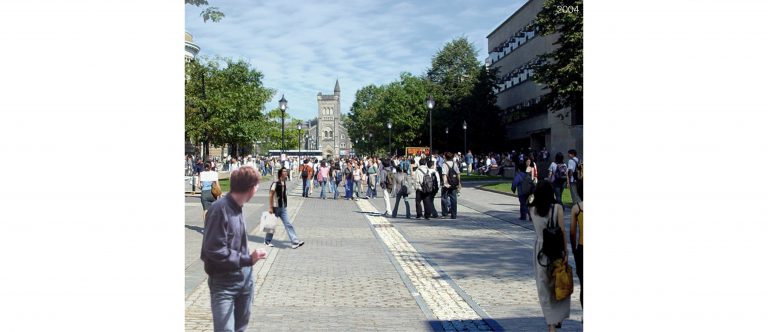
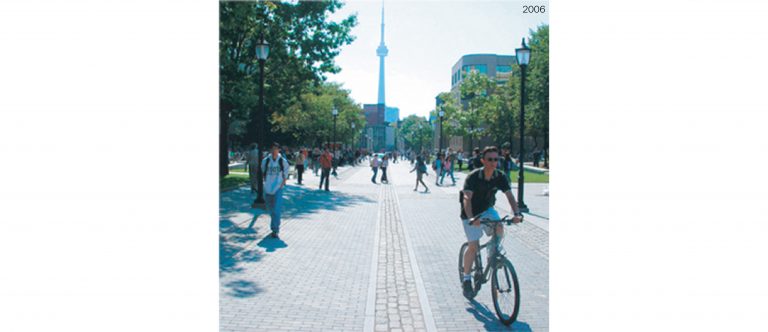
King’s College Road is transformed from a drab, vehicular service road into a more ceremonial corridor – giving priority to pedestrians. The road is center-drained rather than crowned to eliminate curbside puddles, improve walking conditions, and reduce winter salt splash onto lawns and trees. The road accommodates necessary vehicles that can share the space with pedestrians safely.
The redesign of the street corridor unifies the diverse architectural styles of adjacent buildings by establishing a consistent landscape pattern of paving materials and site furnishings.
Awards – Regional Merit Award, CSLA (2005), Honourable Mention, Urban Design Category, National Post Design Exchange Awards (2005), Honourable Mention, Toronto Architecture and Urban Design Award (2005)
+ Project Details
University of Toronto Alumni House

+ AN ENTRY PLAZA
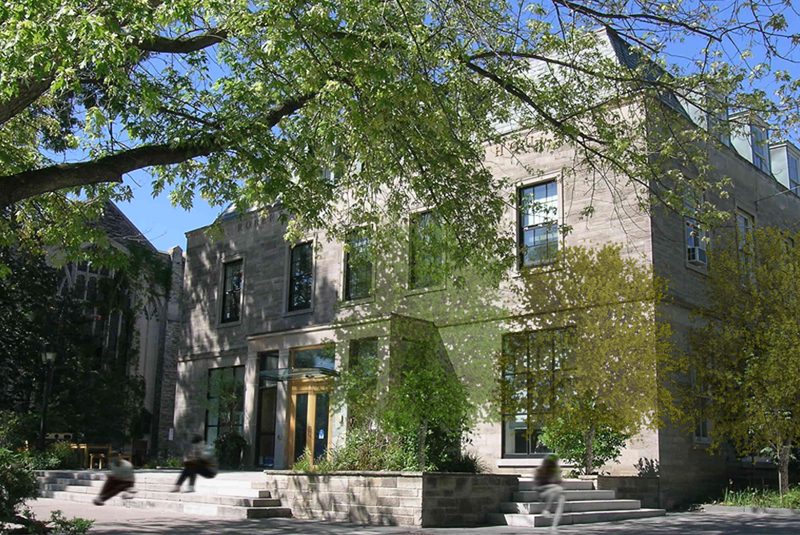
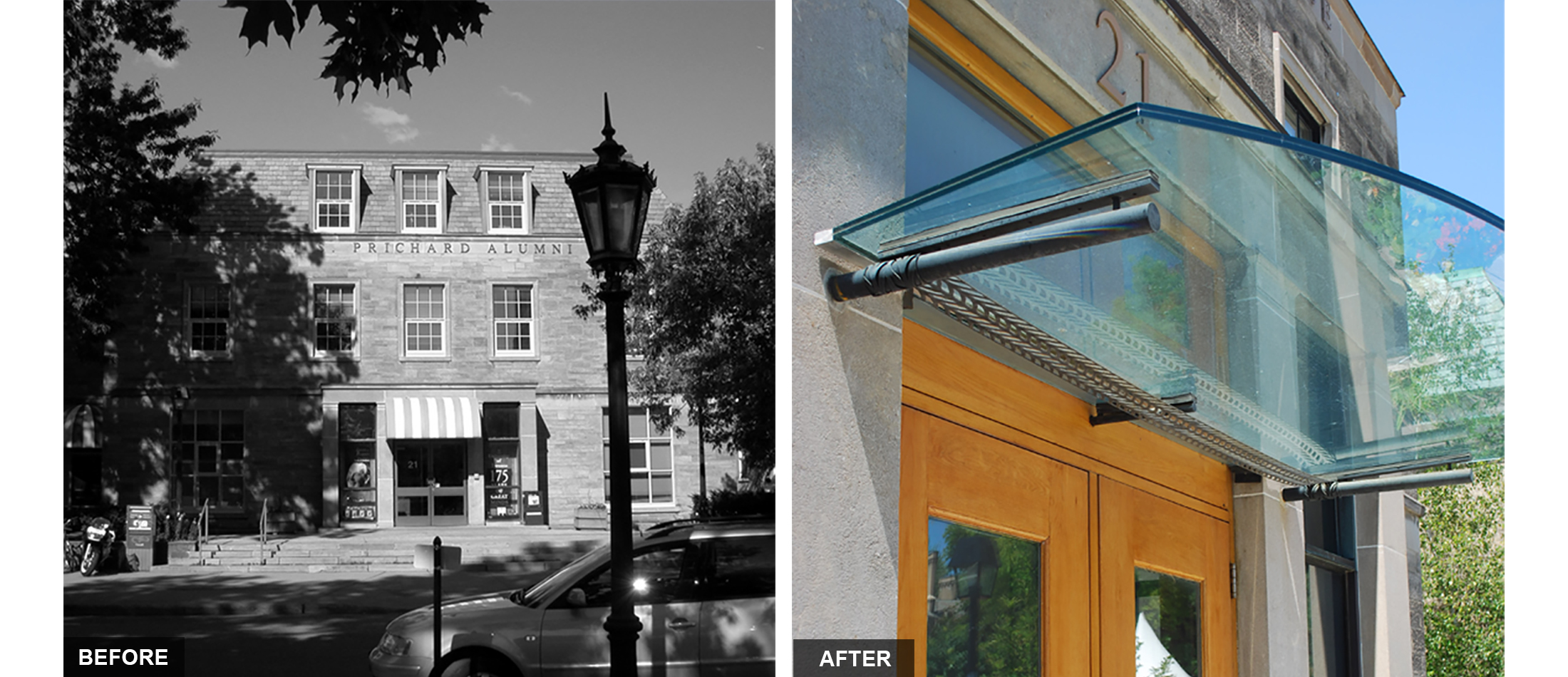
This Edwardian style building, now home to the new J. Robert S. Prichard Alumni Development House, is situated between two historical Neo Gothic colleges. The client requested that rejuvenation of the existing terrace built in 1950 include a new canopy, door, outdoor furnishing and planting.
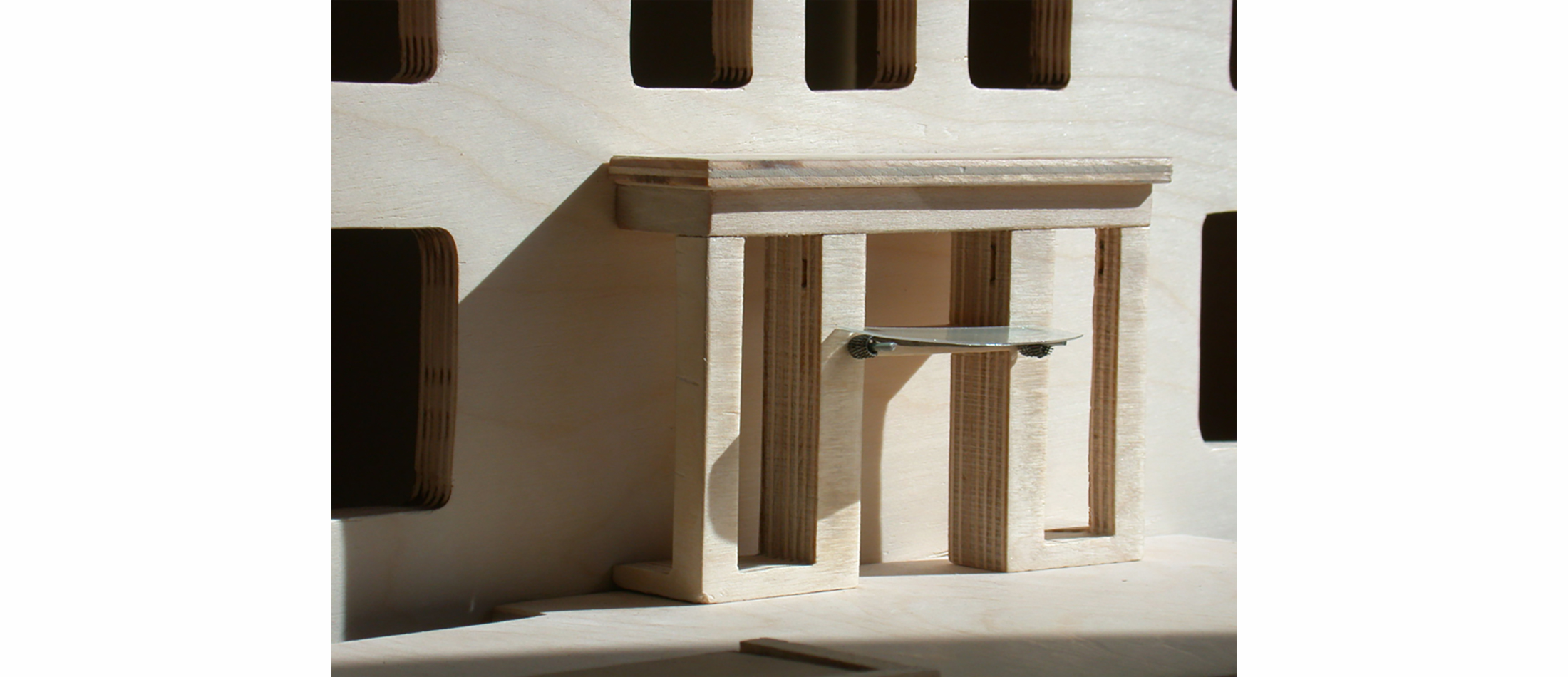
It was important to address the historic elements in a contemporary way, that also harken back to previous uses of the building (University Bookstore). The canopy was designed to float, suspended through steel tension rods that penetrate the building walls and are bolted to the basement ceiling. Laser cut steel designed to have the lightness of fabric wraps around the steel rods. The steel pattern for the canopy was a Neo Gothic detail taken from the stone work of the neighbouring Knox College beside it.
Budget constraints necessitated the reuse of existing stone in combination with new stone for the re-construction and re-configuration of the existing steps and walls. In addition, a barrier-free access ramp was added. Planting beds contain Star Magnolia with a perennial tapestry of Foam Flower, Day Lilies, Christmas fern and Lady Fern. The building, once the University Bookstore, is now the new Alumni Development House.



+ Project Details
University of Toronto Alumni Gates
+ A UNIVERSITY GATEWAY
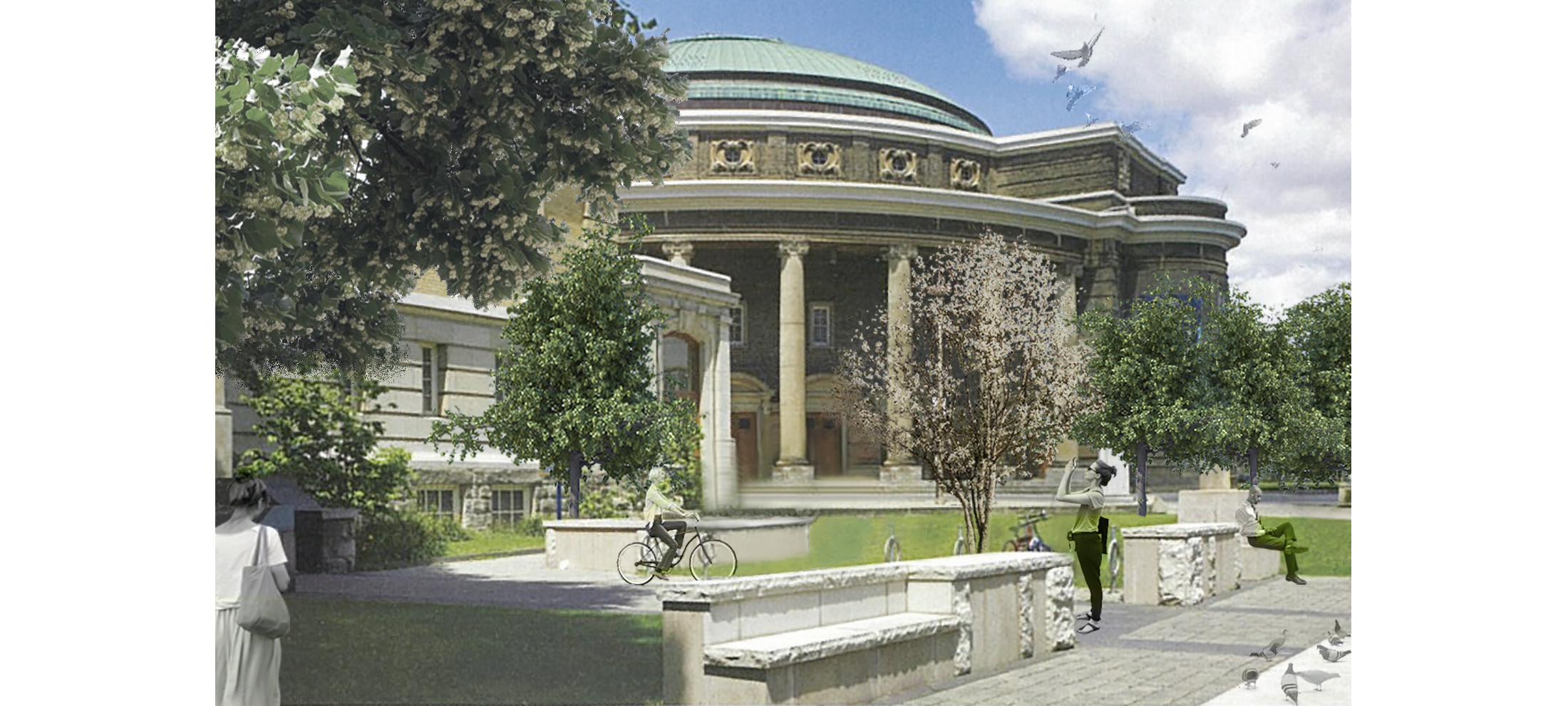
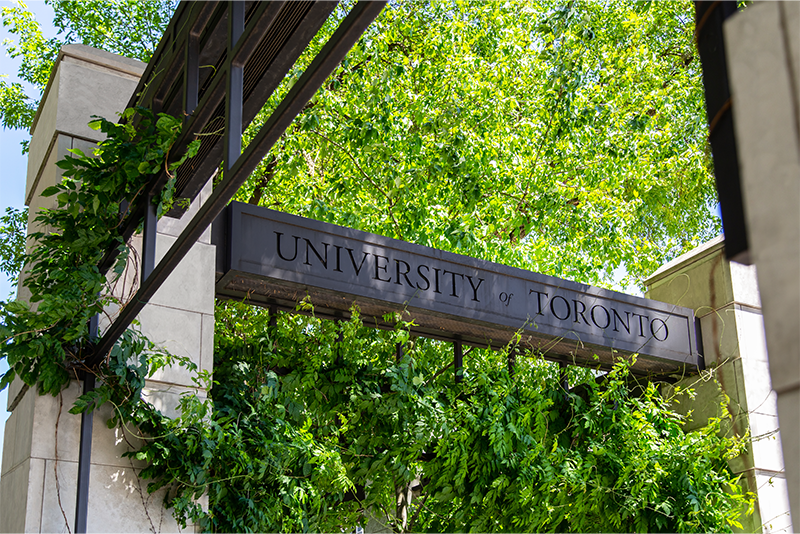
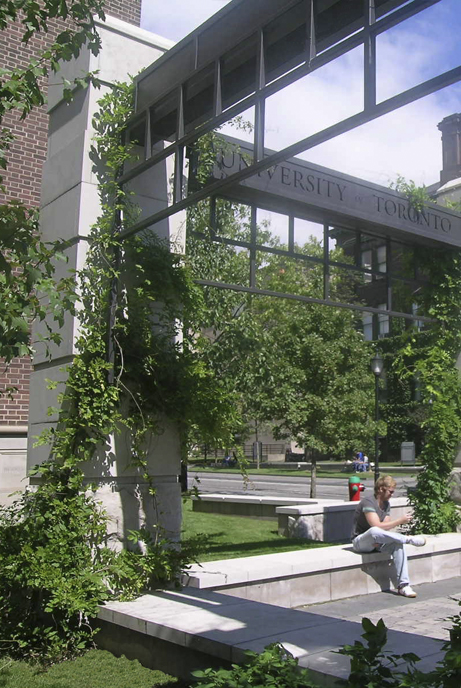
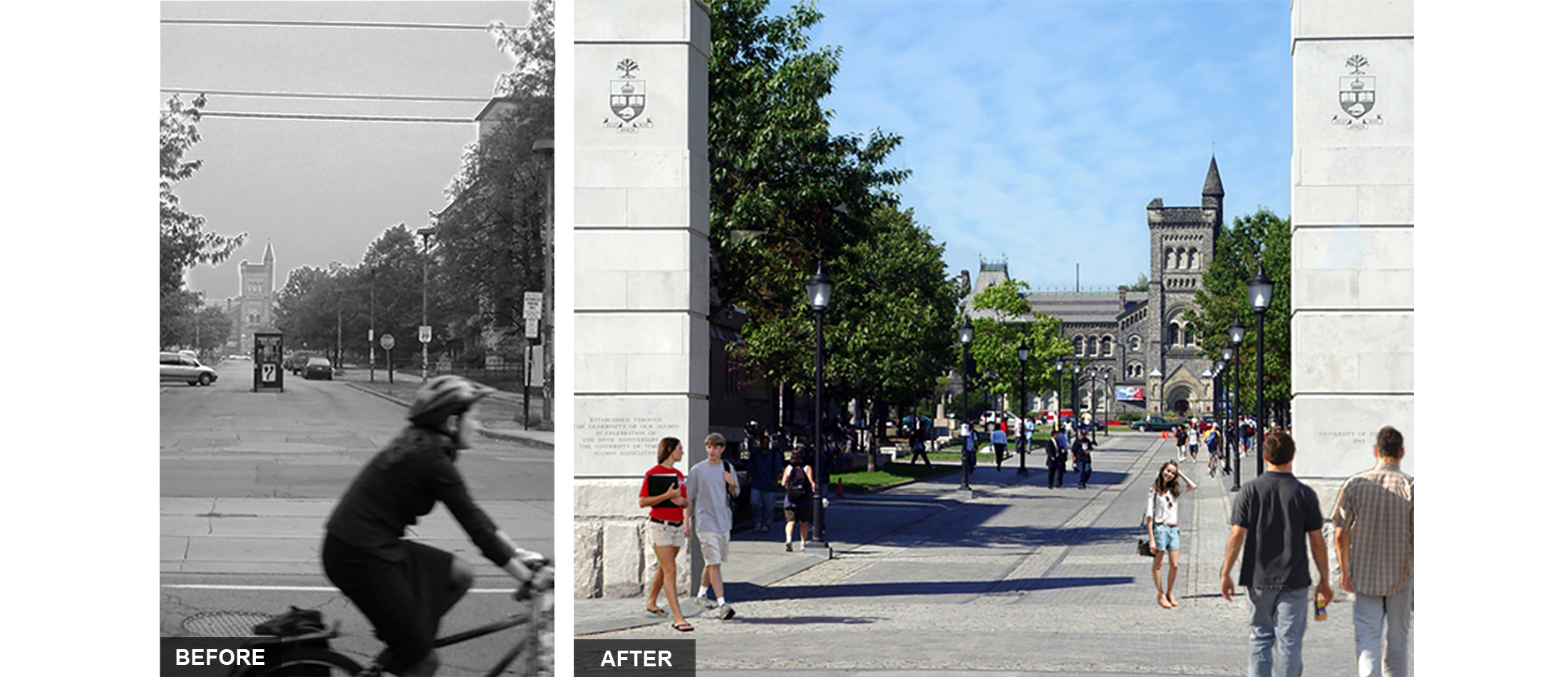
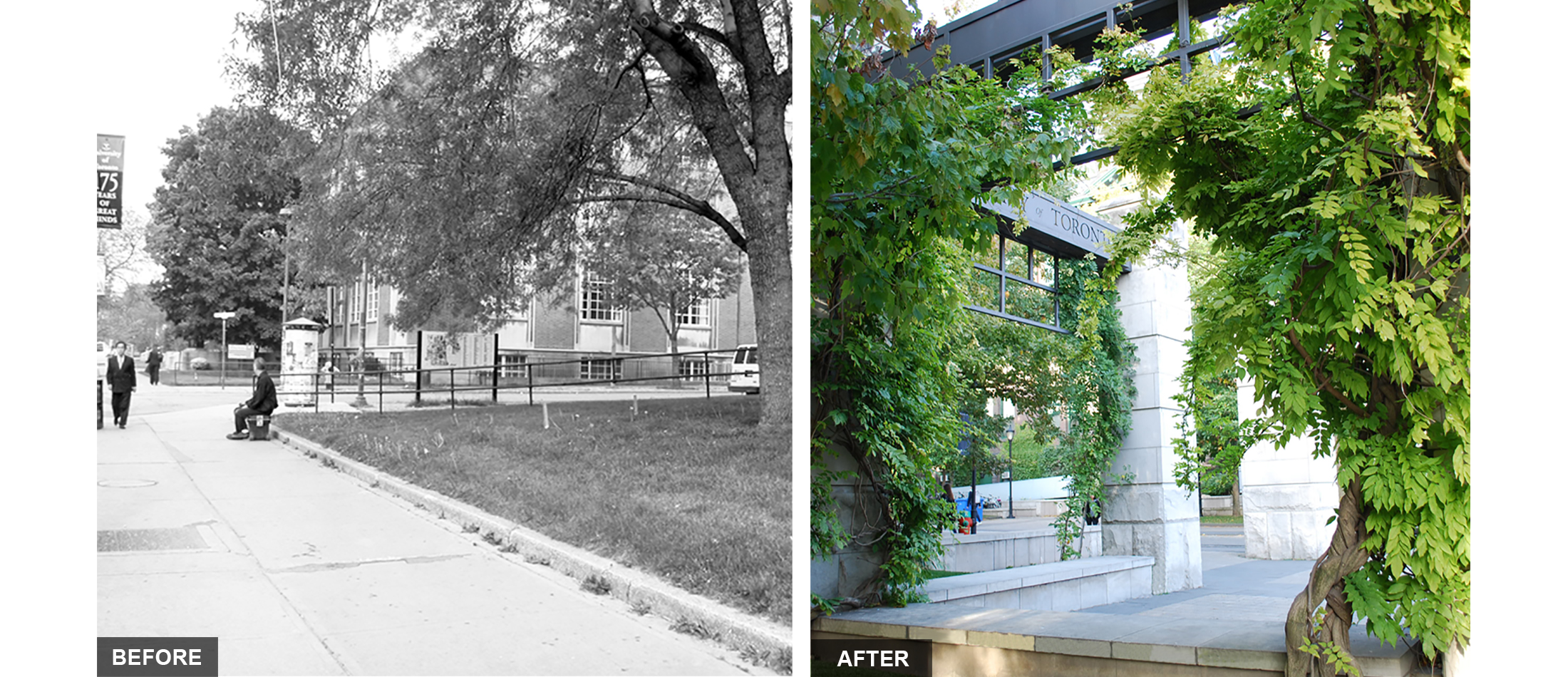
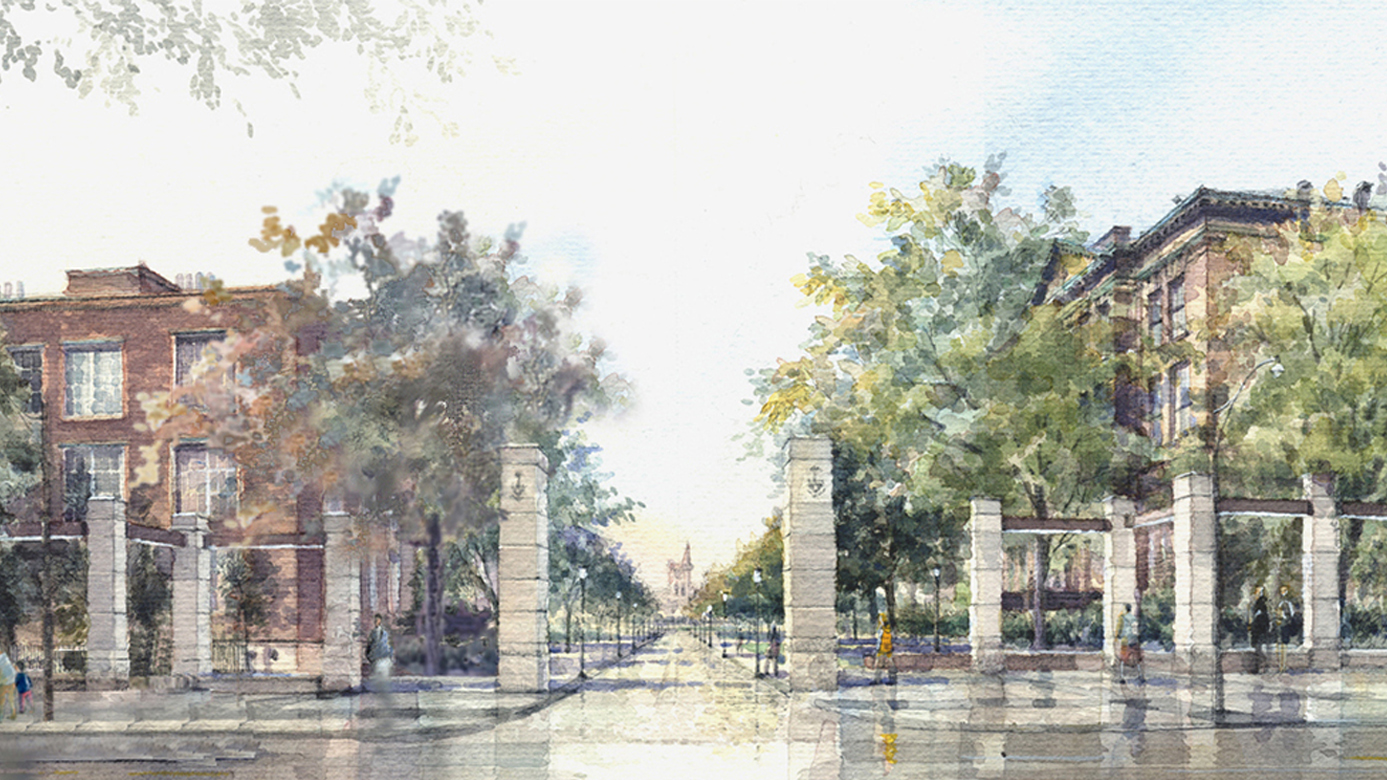
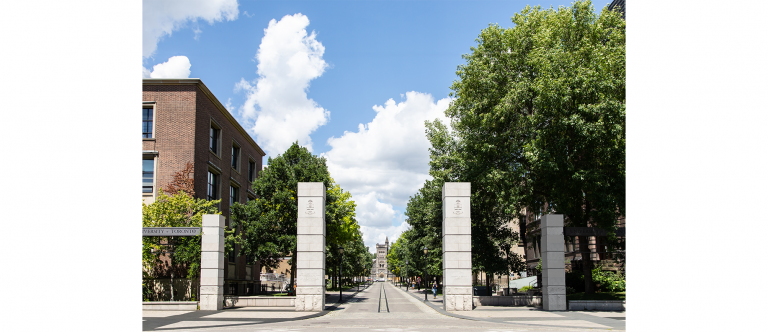
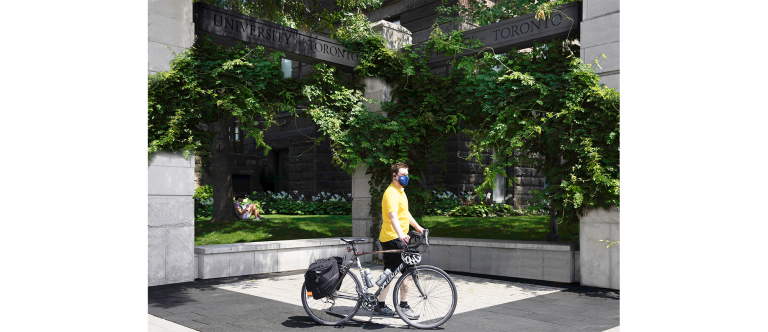
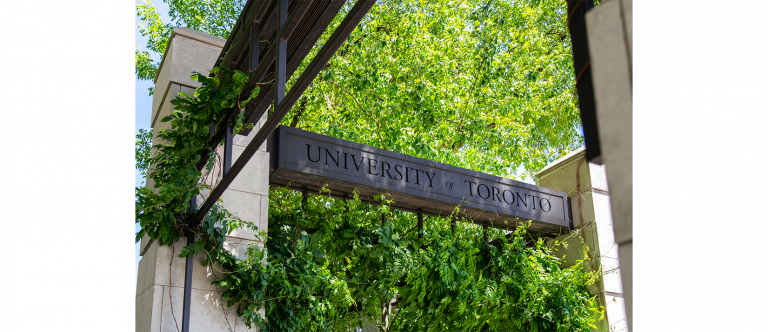
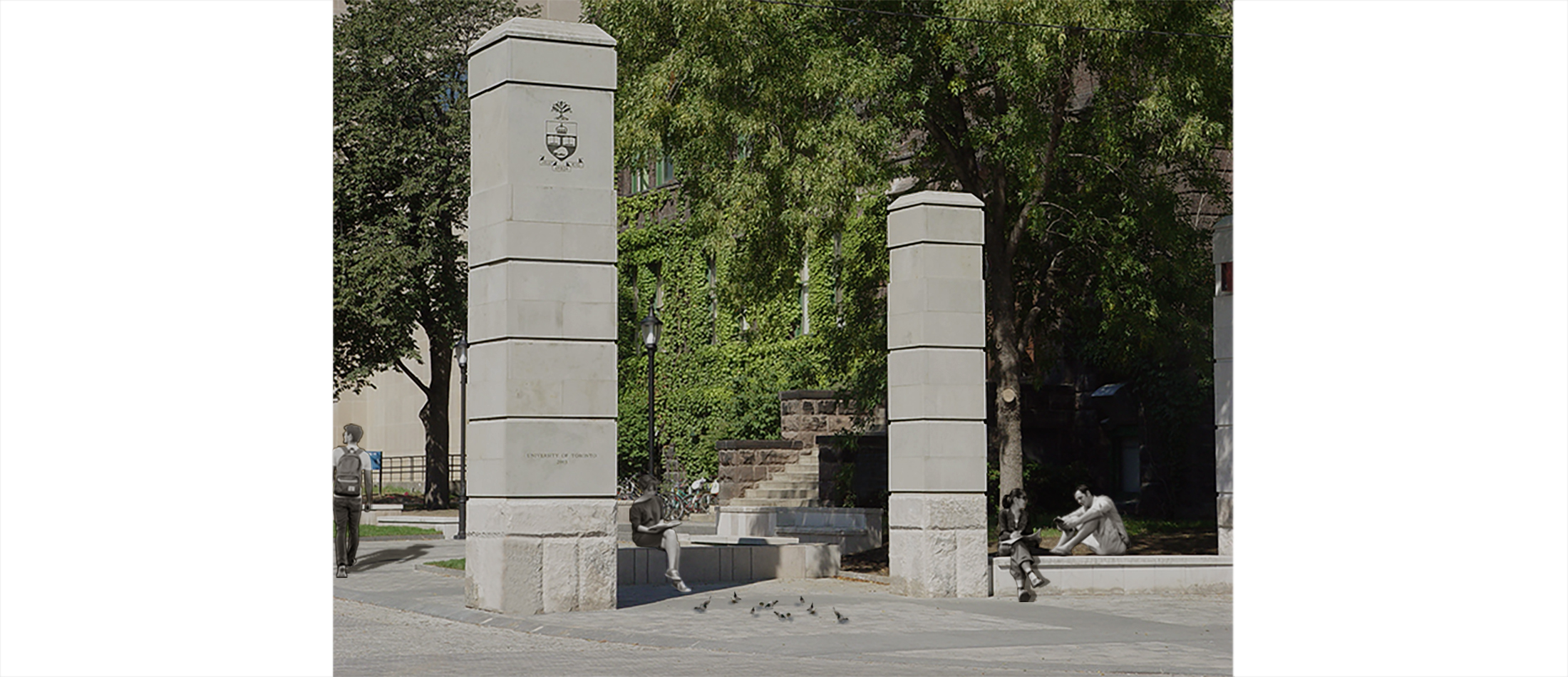
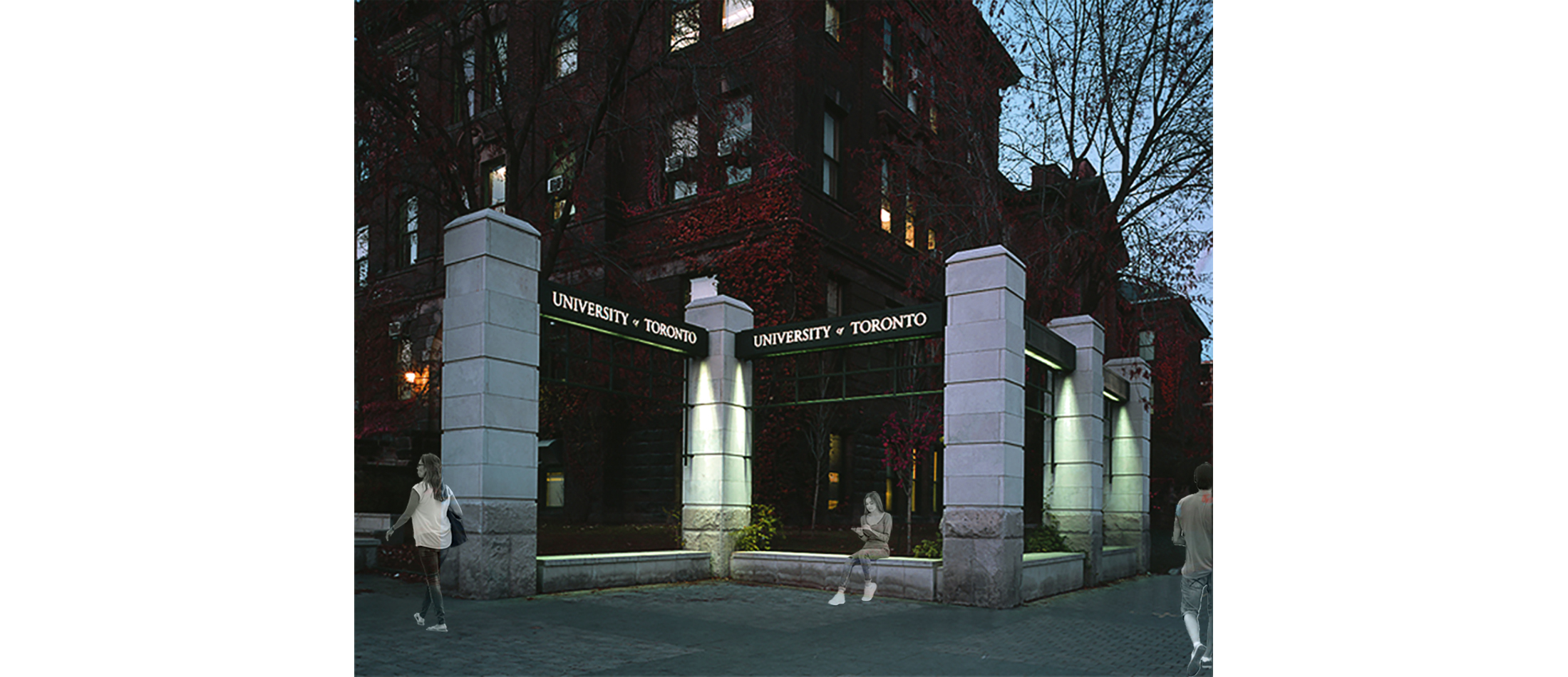
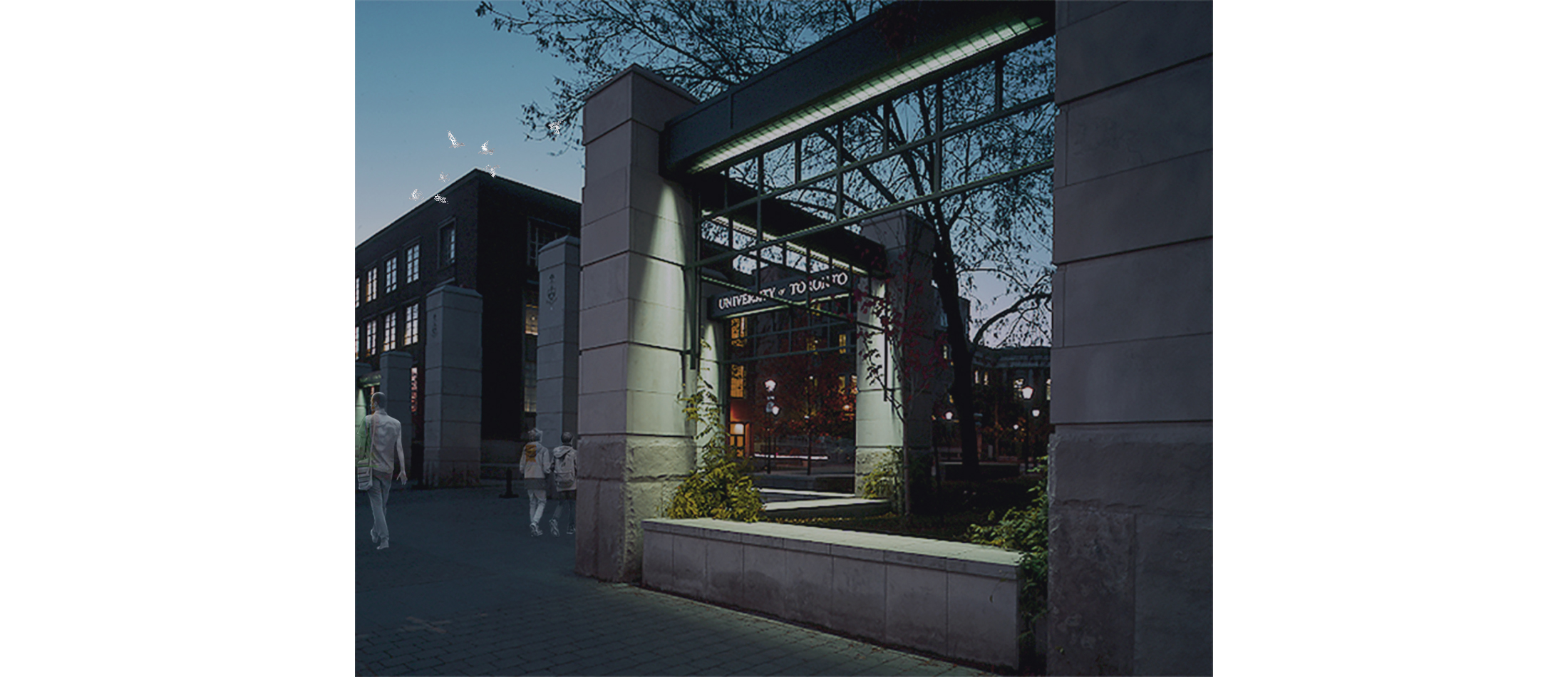
The new gateway to the University creates a civic landmark for the campus along College Street and celebrates the transition between the city of Toronto and the historical spaces of King’s College Precinct.
The gates are designed to frame the view down King’s College Road to King’s College Circle. The “concave” shape invites and draws visitors into the campus. Low walls provide seating areas to encourage people to gather and meet at an entry plaza to the university.
Photo Credits: Daria Perevezentsev/U of T Engineering
+ Streetscapes
Canada Life Campus
+ REJUVENATION OF THE CANADA LIFE CAMPUS
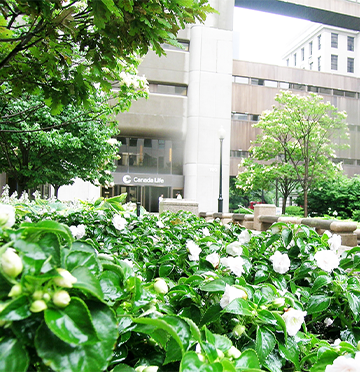
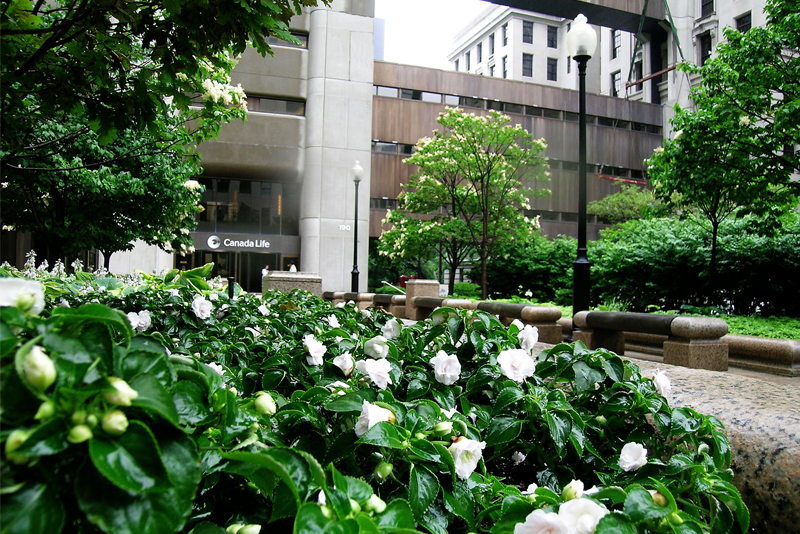
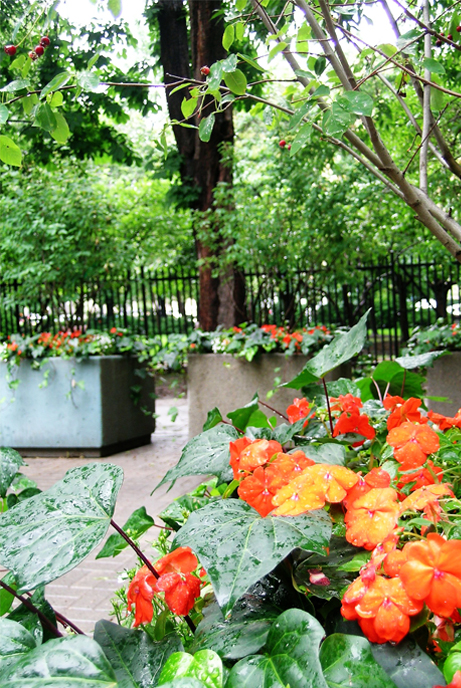
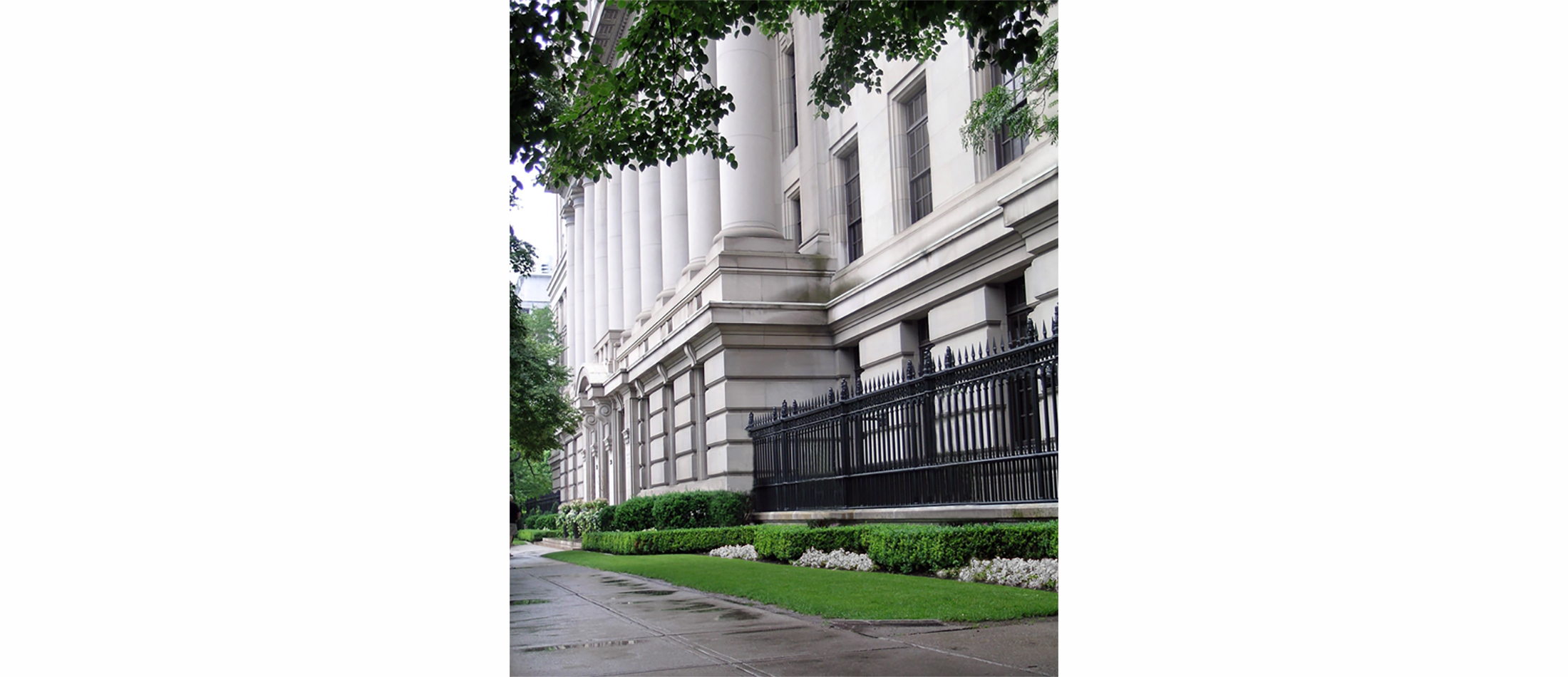
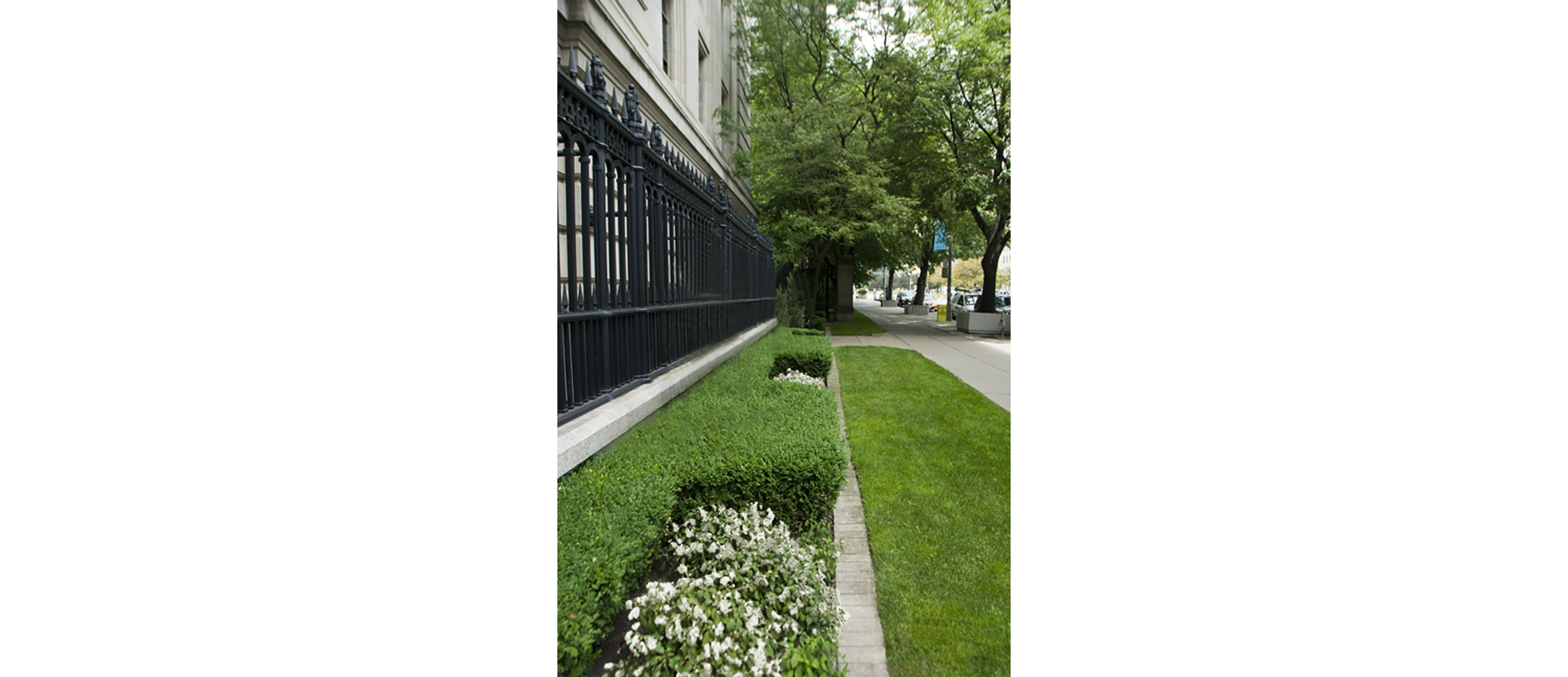
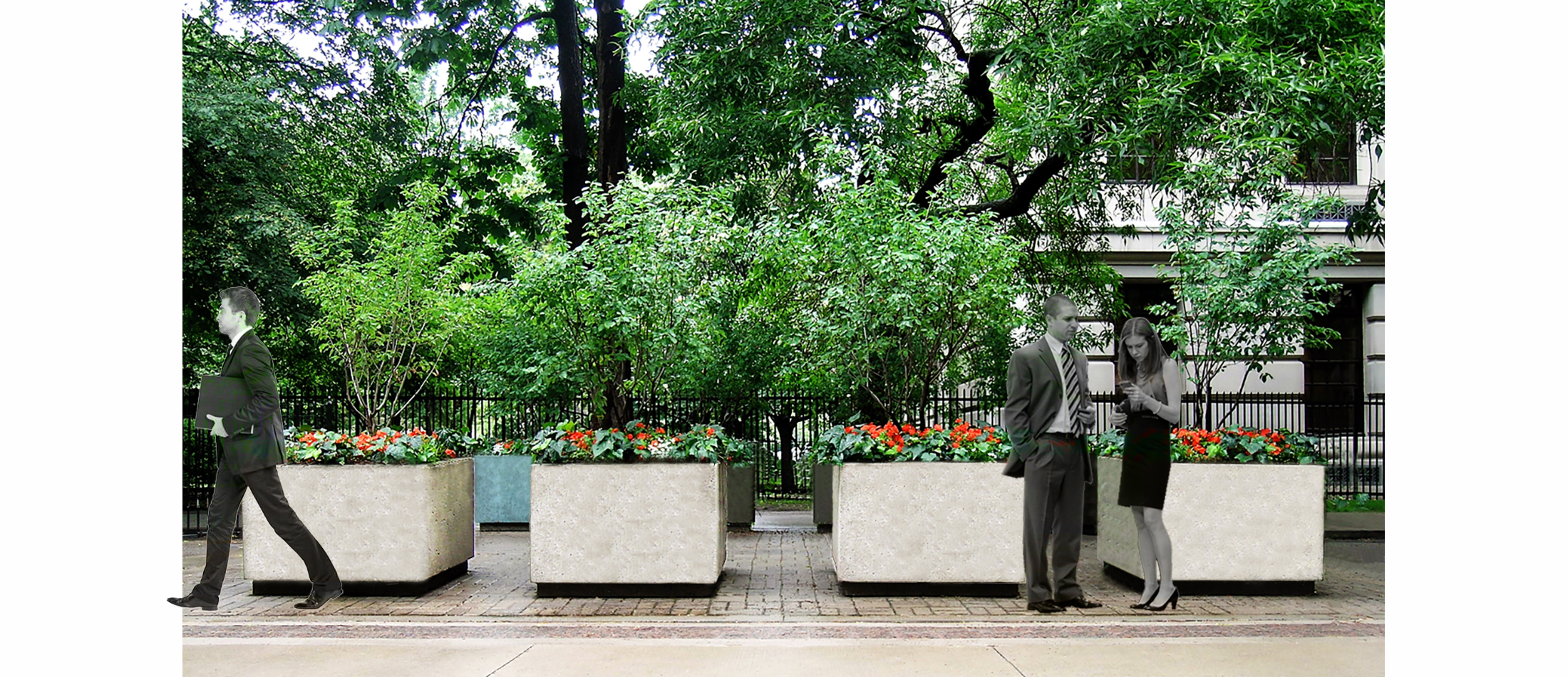
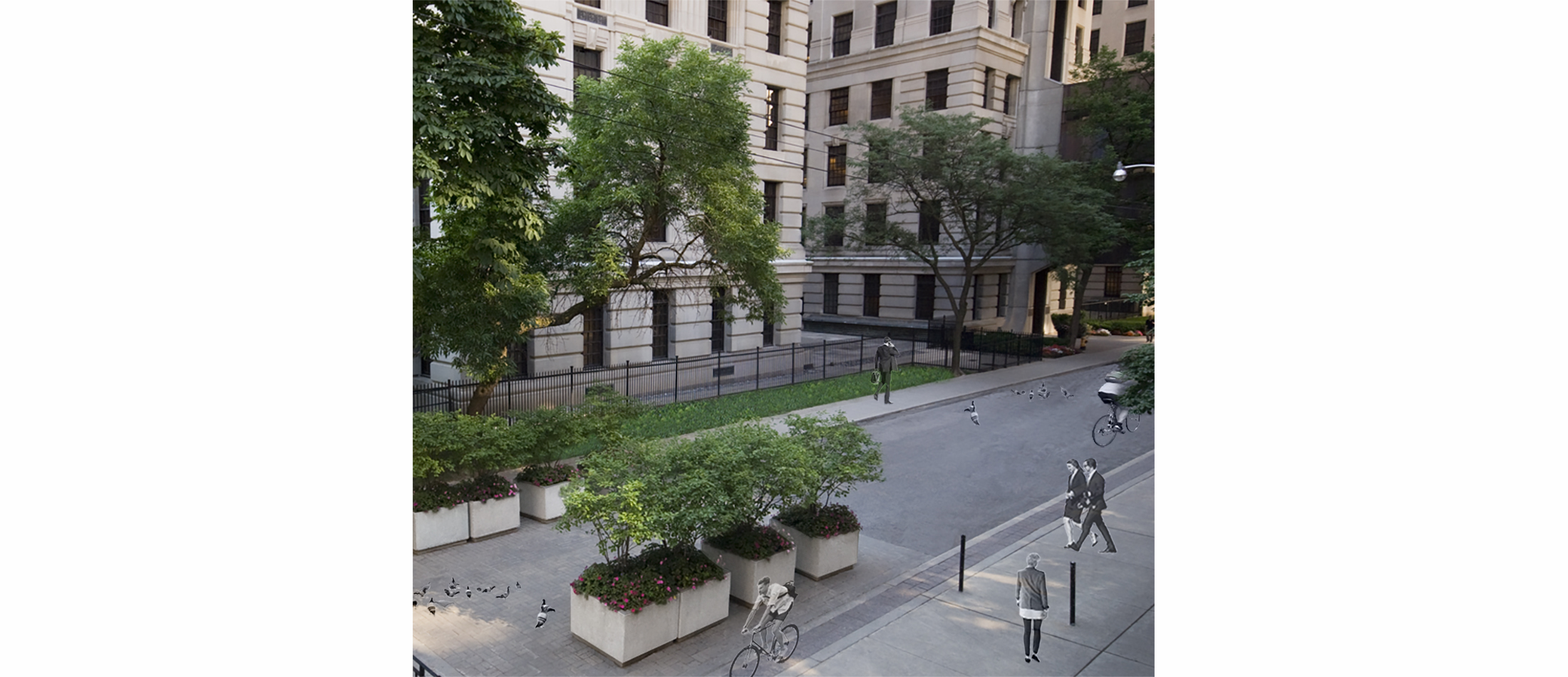
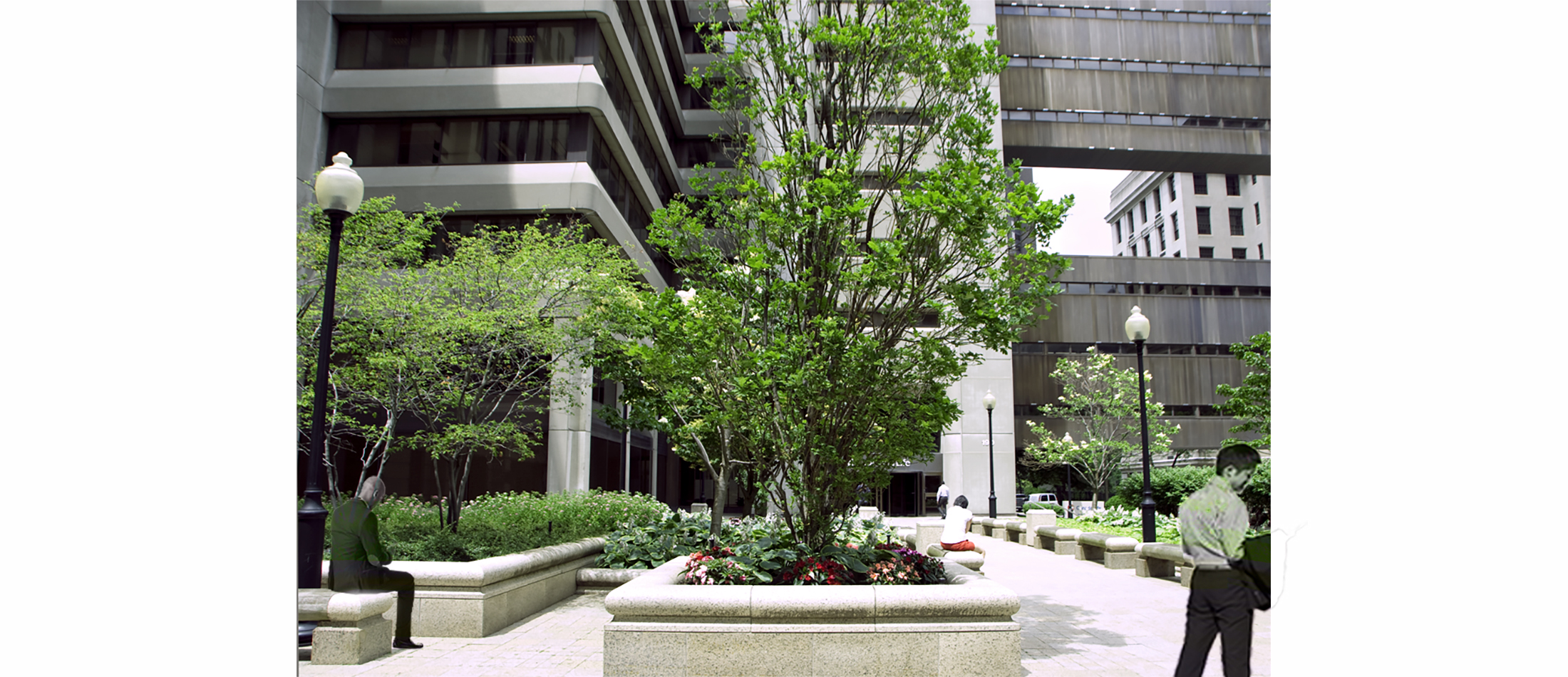
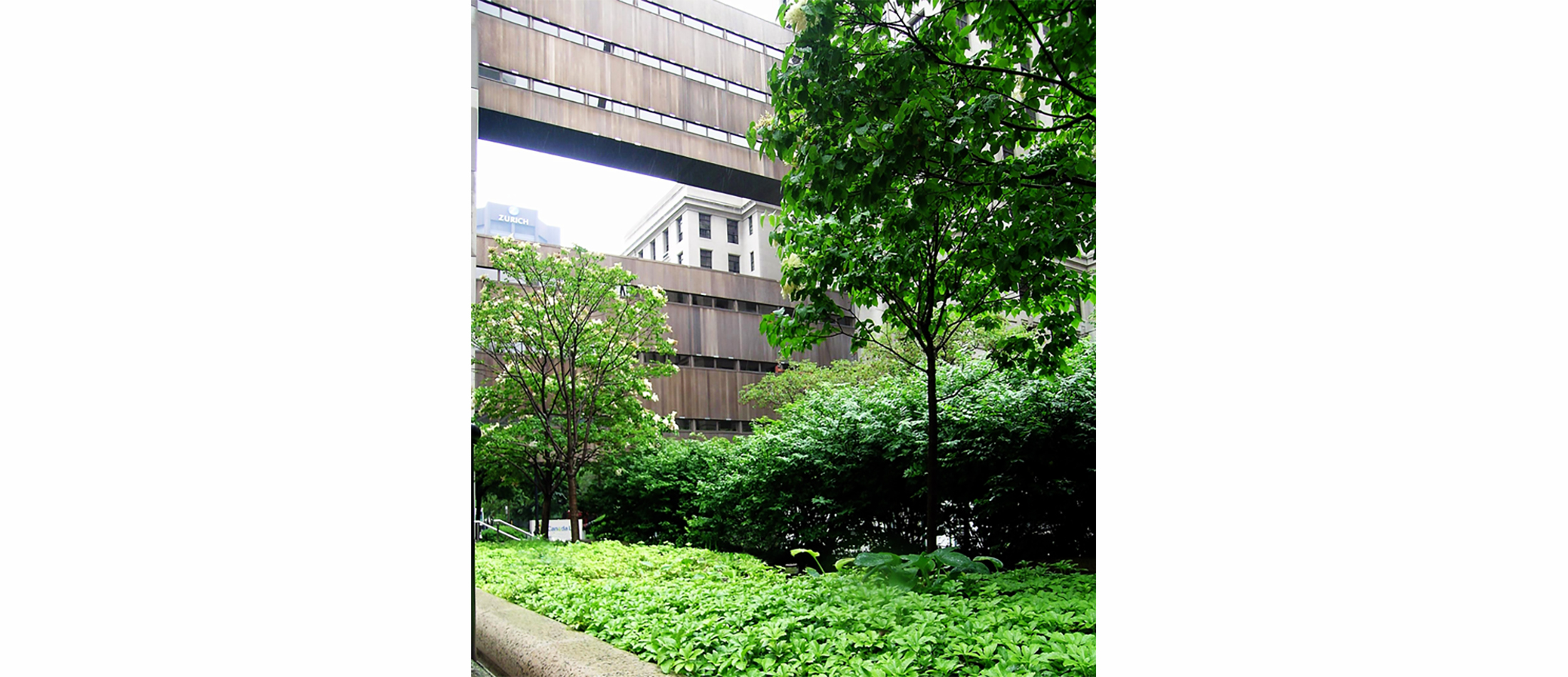
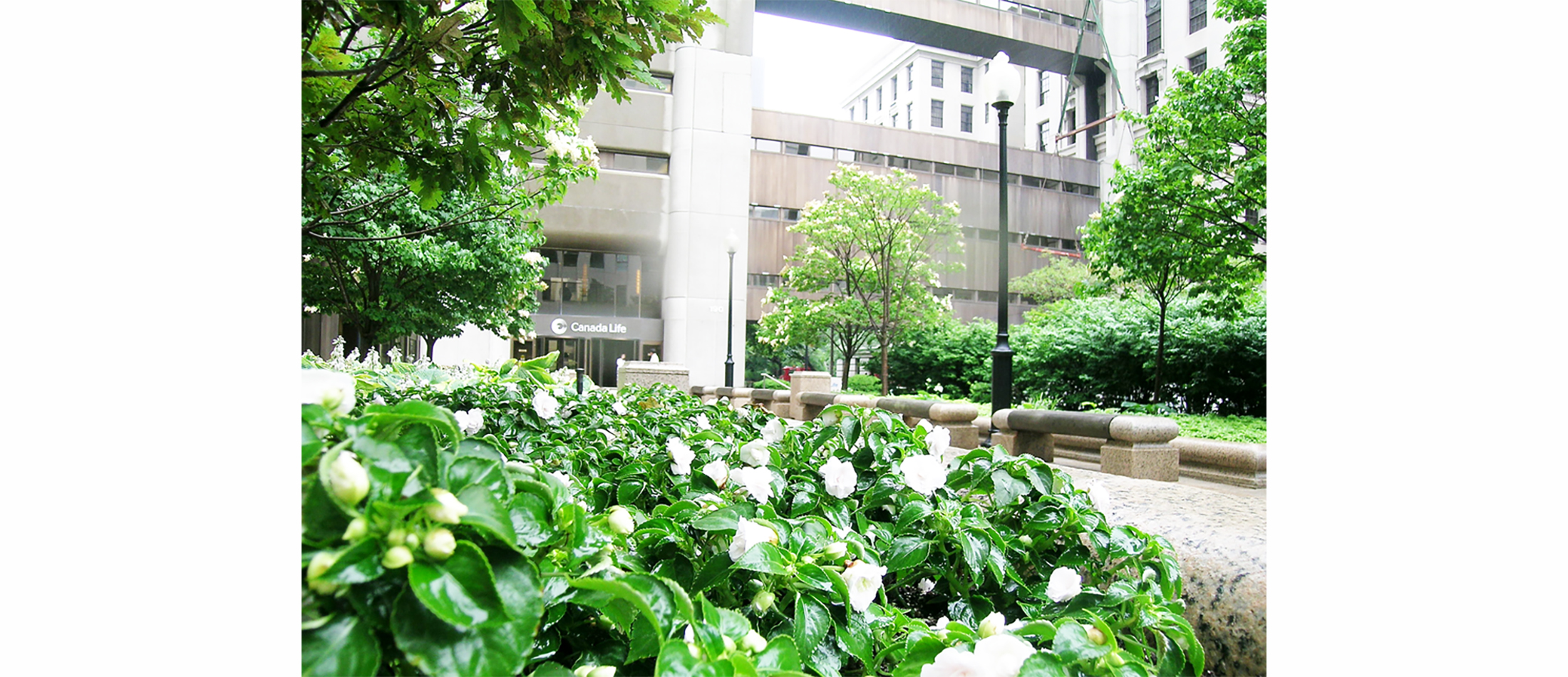
The Project at 330 University Avenue was a landscape rejuvenation of the five acre Canada Life Assurance campus. The campus encompasses a park, streetscape, front entrance plaza, podium and several patios and terraces. The rejuvenation process involved a review of the original landscape plan and an intensive analysis of the existing conditions. This resulted in the specification of repairs, plant removal and the introduction of a more appropriate plant species for the site. New planters, ramps, curbing, pathways, patios, terraces and plazas were added as well. In addition, a new annual planting scheme was designed and implemented in an effort to beautify the campus.

+ Project Details
ERAMOSA TOWNSHIP
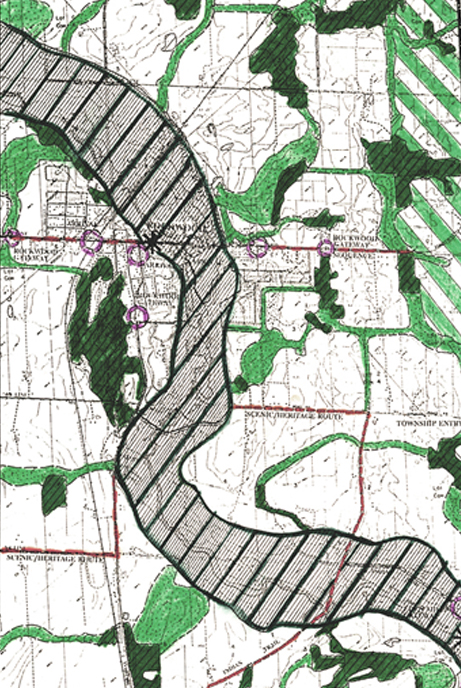
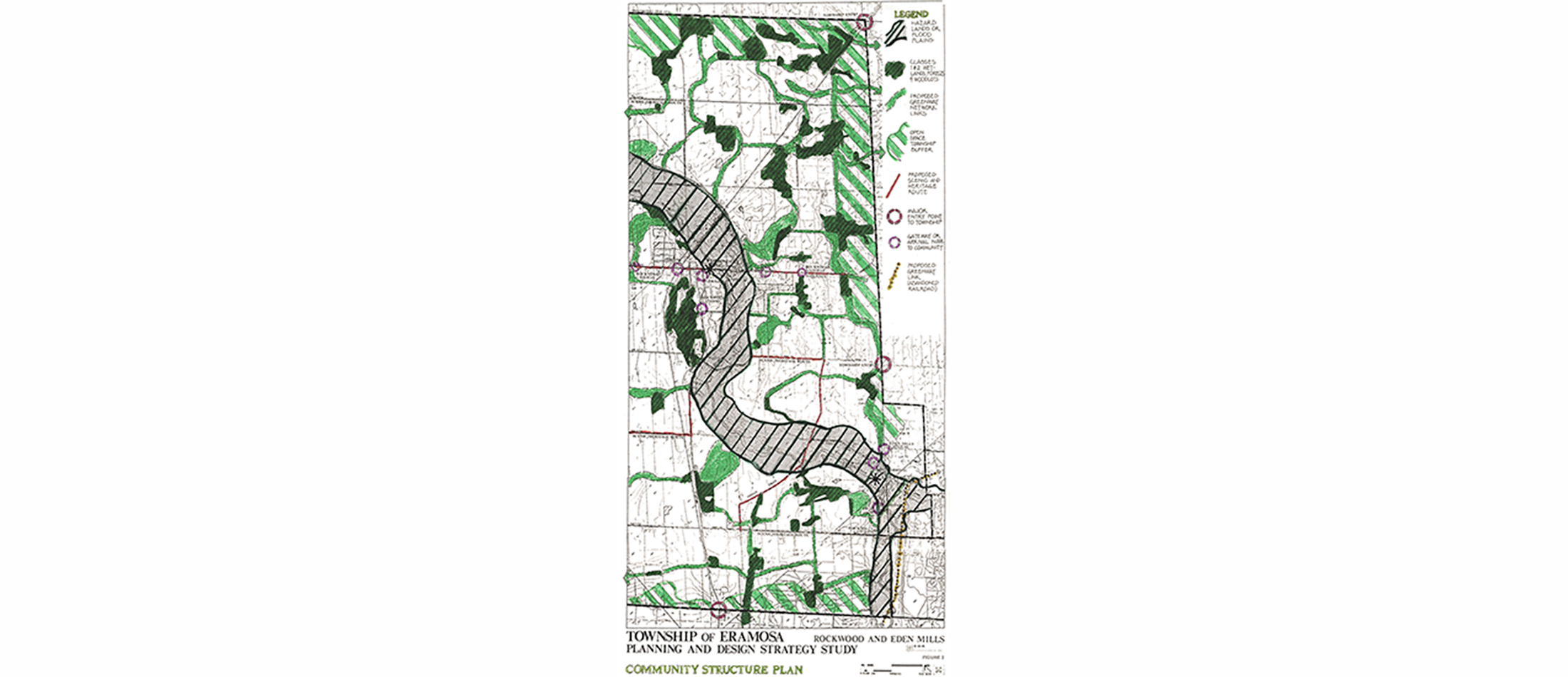
+ ECOSYSTEM TOWNSHIP PLAN
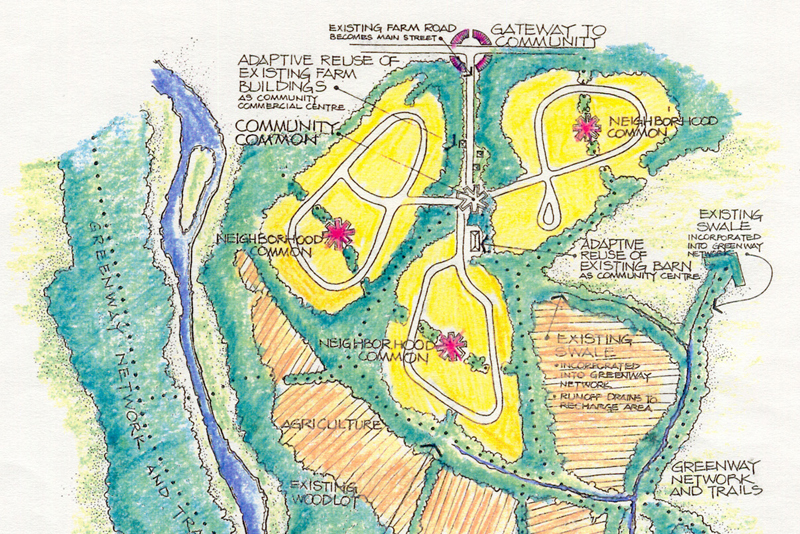
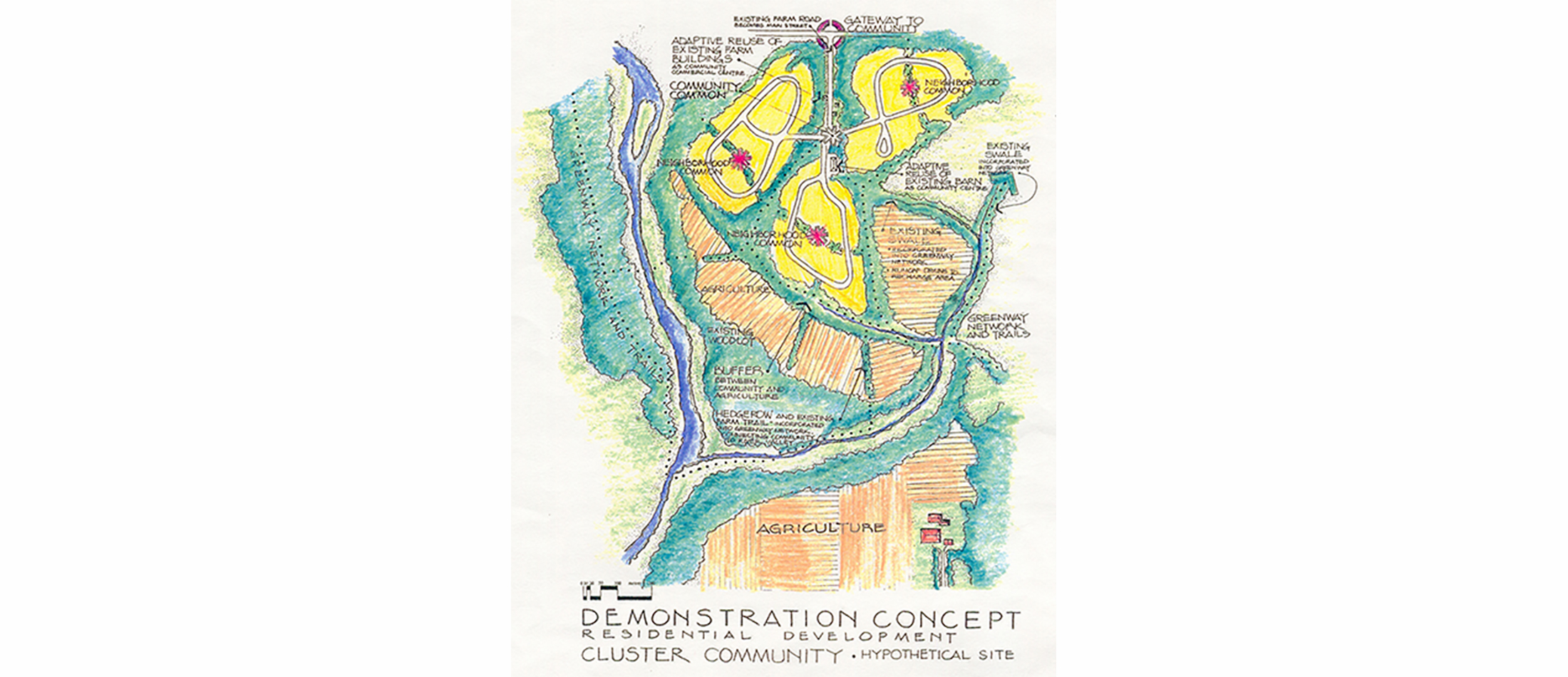
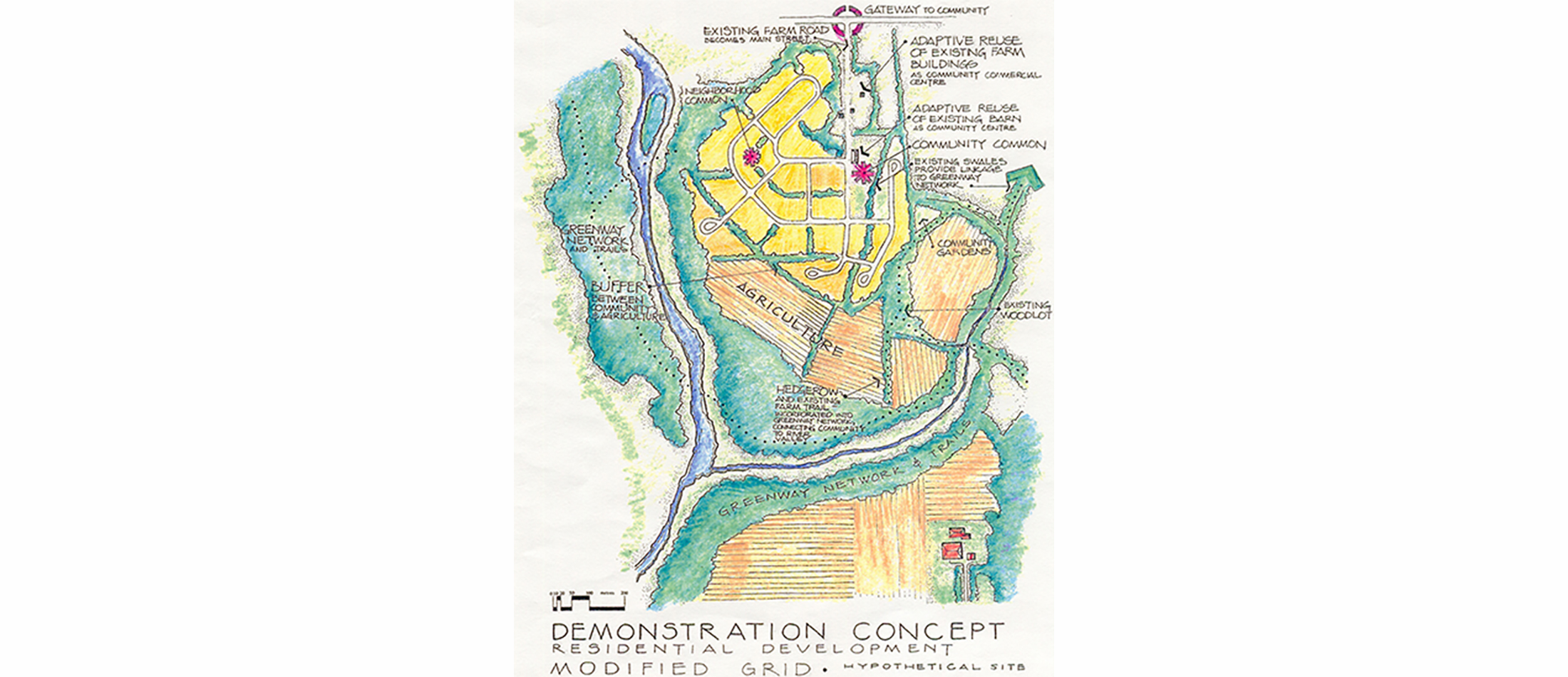
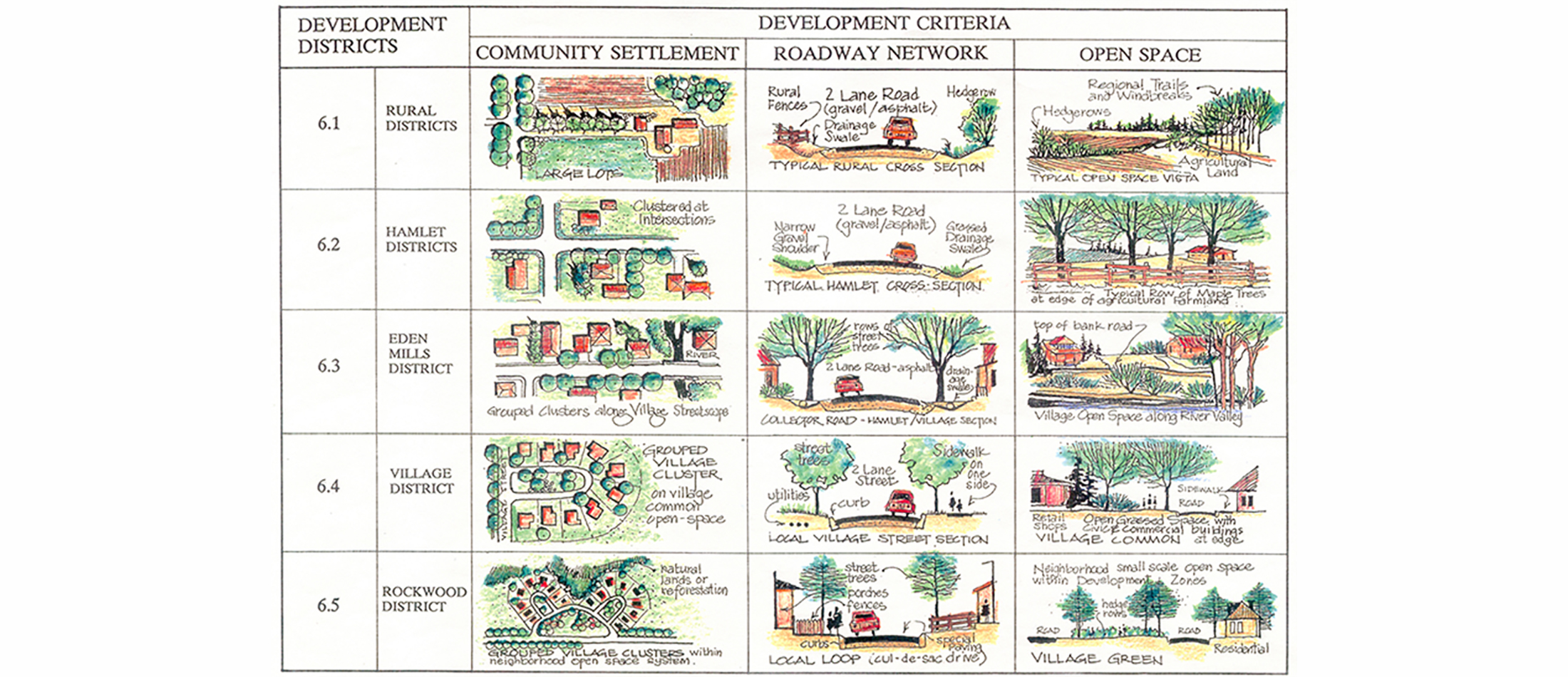
This regional planning strategy for the township of Eramosa facilitates sustainable development by minimizing impact on riparian corridors and maintaining an interconnected network of forested areas.
+ Project Details
Eglinton GO Station
+ SUNKEN PLAZA
Elias + has worked on three separate GO Stations and each time the firm has taken a different approach to the design concept. It is based on the design principals that each project addresses design excellence, different site conditions, programmatic elements, client concerns and climate change. In addition, all materials are chosen for sustainability and resilience to salt and intensive pedestrian and vehicular use, with consideration for long term operating and maintenance costs. These principals answer in detail the following challenges. Can landscape, infrastructure and built form encourage the use of public transit in an automobile centric society? How do we interweave pedestrian, cycling, vehicular and rail modes of transportation to encourage this use?
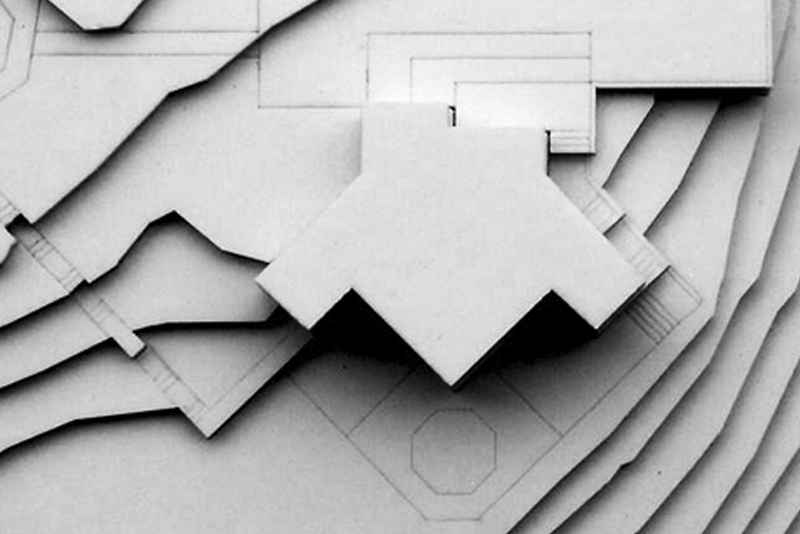
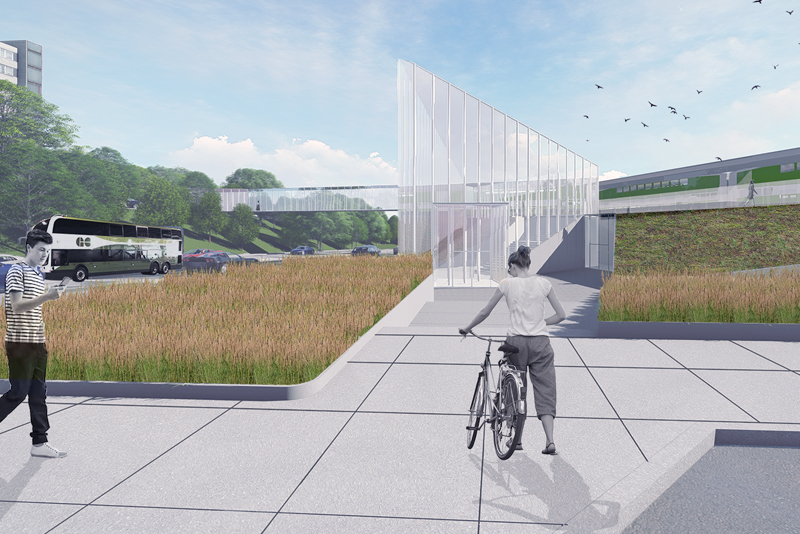
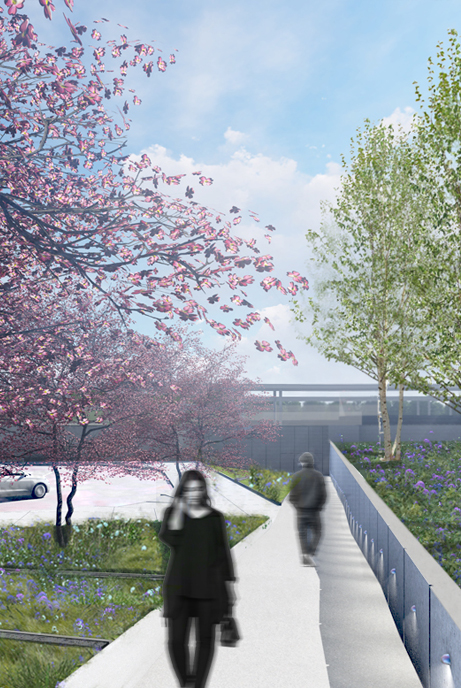
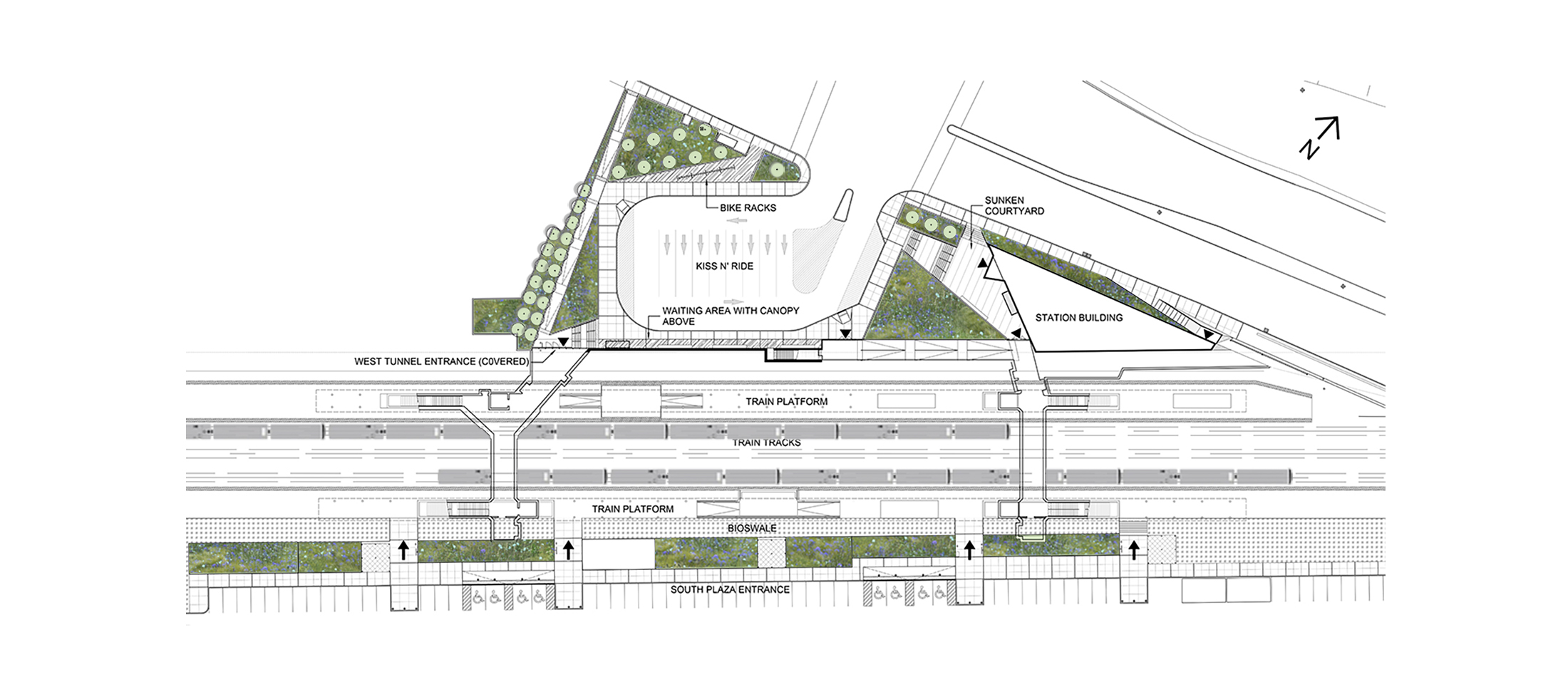
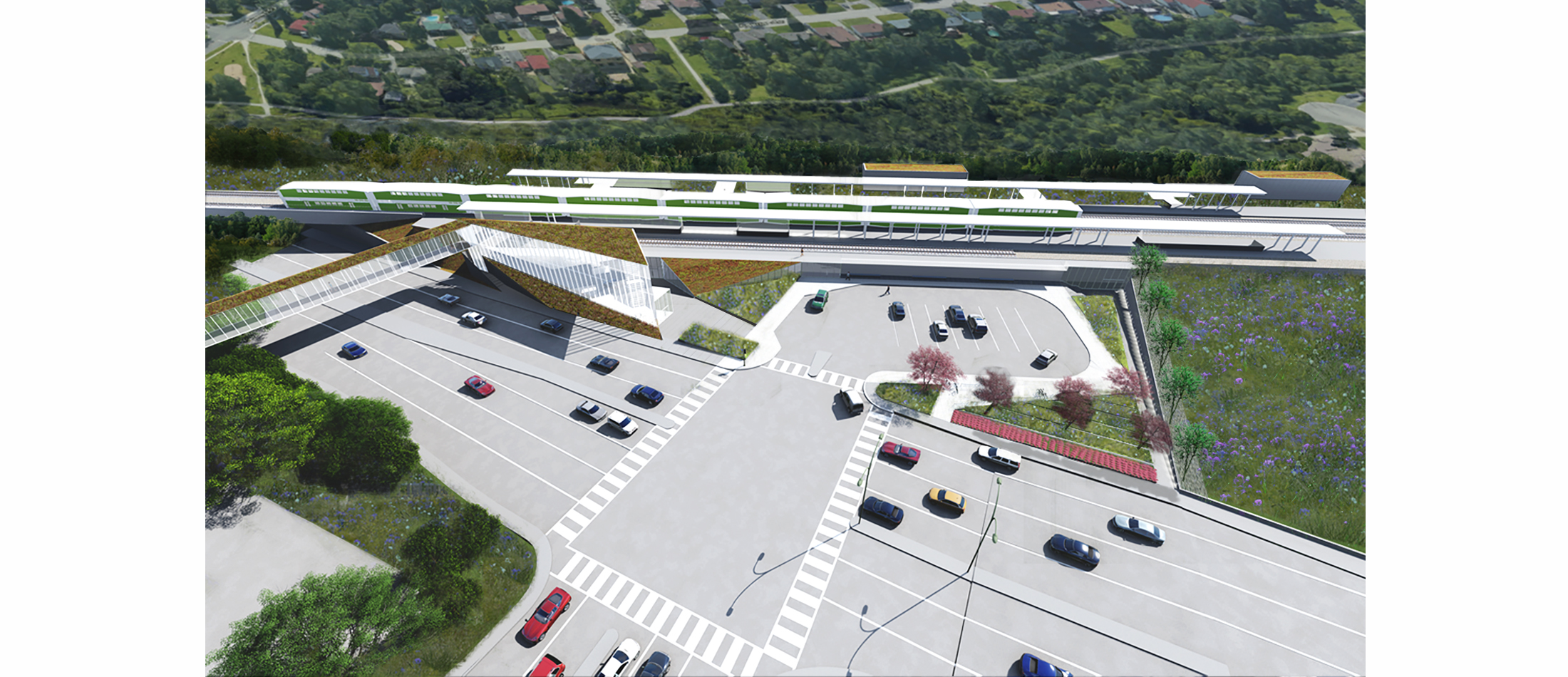
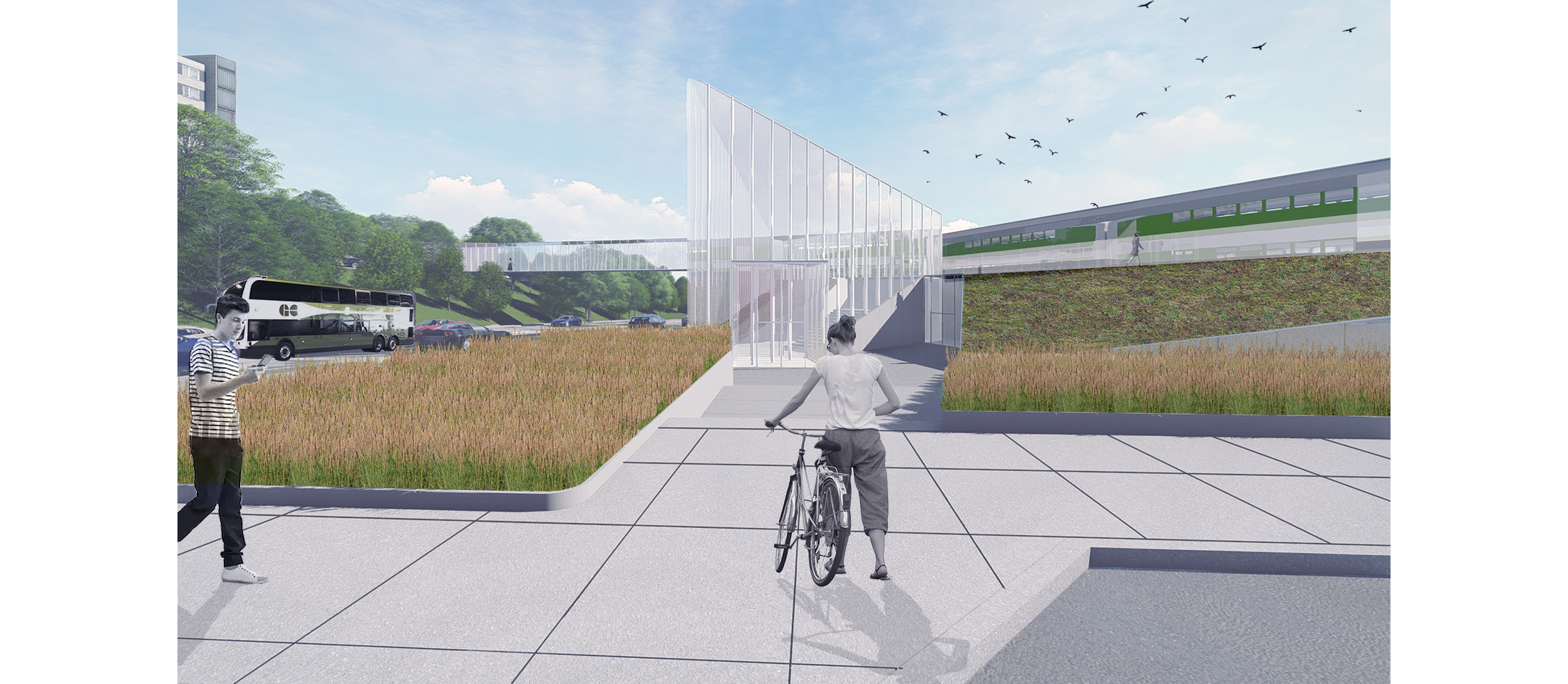
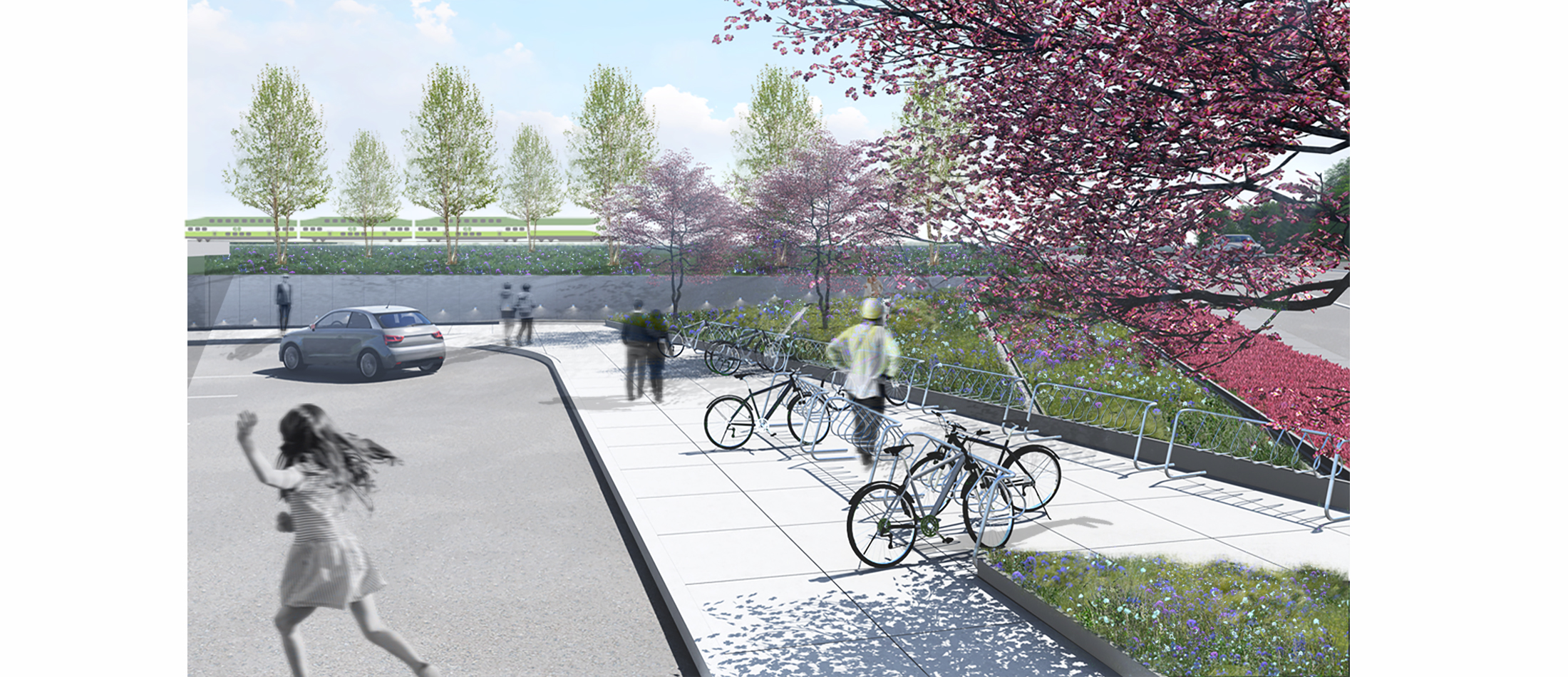
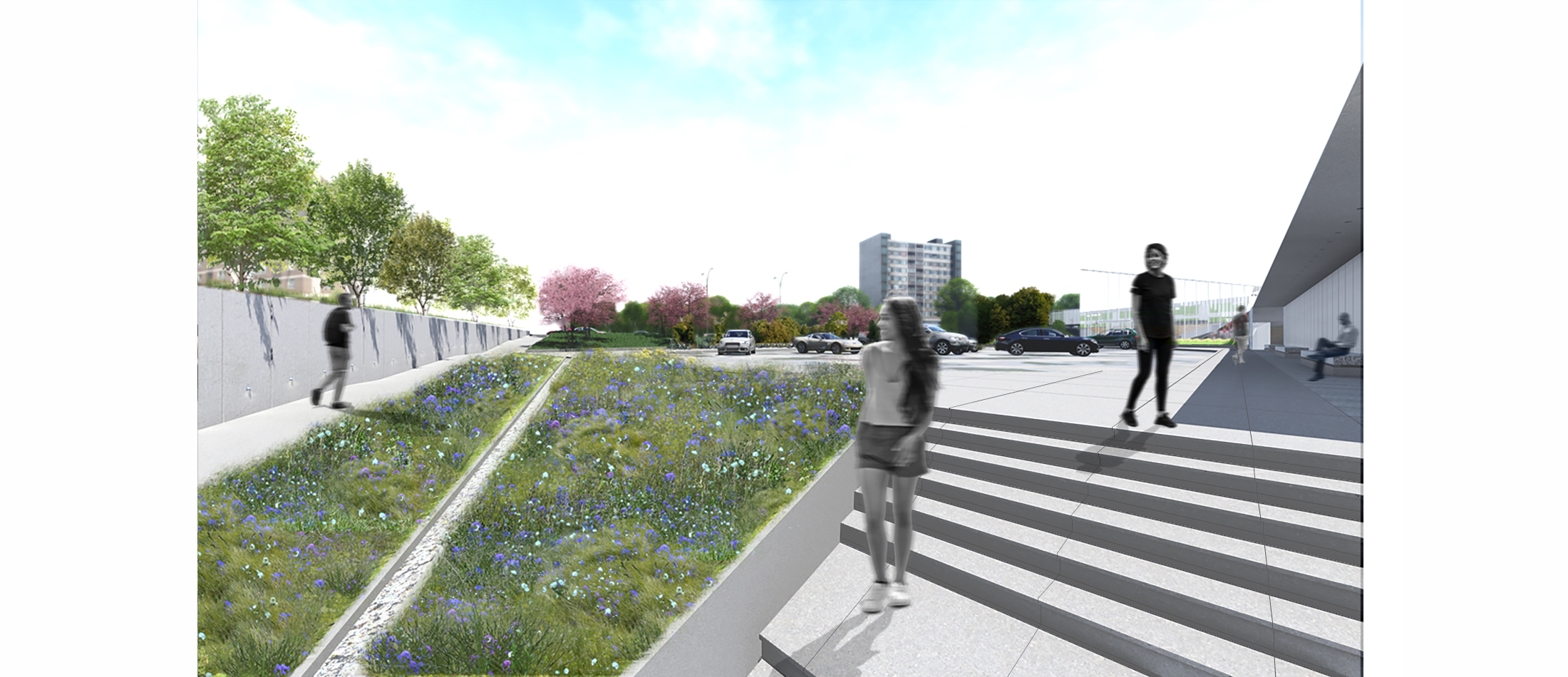
Eglinton GO Station is a unique project in that the topography of the surrounding roads, the climate of the extremely exposed urban context and the limited physical space for the new GO Station presented many challenges. In an effort to accommodate these site conditions, a triangular building was designed to fit into the tight area; the entry plaza is sunken into a sculptural and dynamic courtyard-like place that surrounds the commuter with lushly vegetated terraced concrete planters and a green roof. These elements form edges that shelter the commuter from harsh windy conditions. In the vehicular Kiss N` Ride zone, a large bike parking area is integrated into planting terraces to promote bike use. Concrete and granite benches are placed strategically under overhangs in protected walled areas alongside the Kiss n` Ride. A visually pleasing ornamental fence is designed to provide safety and reflect the minimal contemporary architecture of the building. It extends throughout the site, including south of the tracks, further connecting the building and terraced planters to each other and the landscape. On the south side of the tracks, large landscaped areas, mimicking the linearity of the tracks, break up the hardscape and liven up the south parking lot. All of the plants are chosen to enhance and reinforce the industrial character of the site.
As a LEED driven project, two green roofs are integrated into the new station building and one utility building. As well, a proposed future pedestrian bridge across Eglinton Avenue, to connect the north parking lot with the new station, includes a green roof. All of the plants chosen for the site are salt tolerant, native, require minimal amounts of water, are low maintenance and provide seasonal interest.
Award – Canadian Architect Award of Excellence (2015)



+ Project Details
City Terrace
+ A GARDEN IN THE SKY
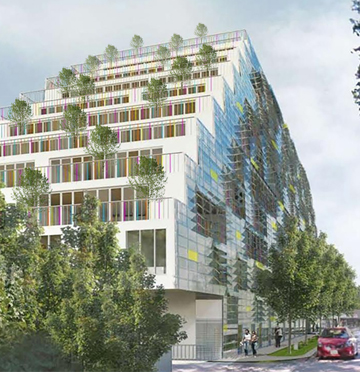
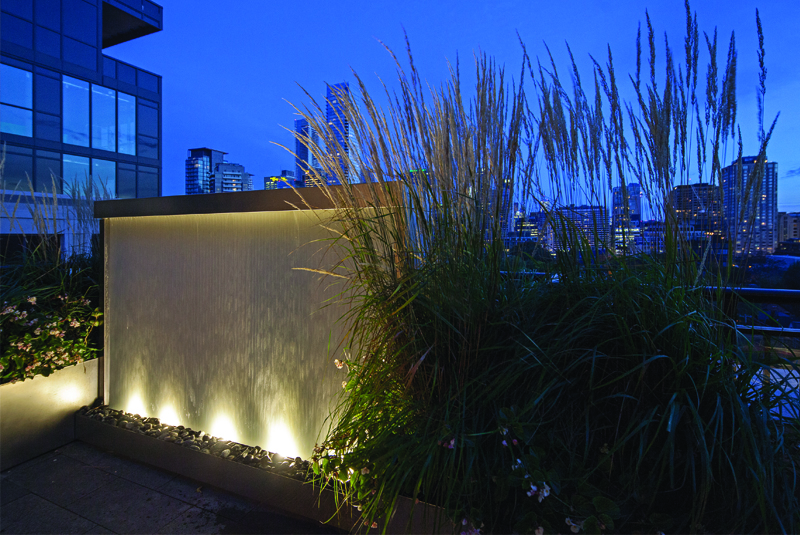
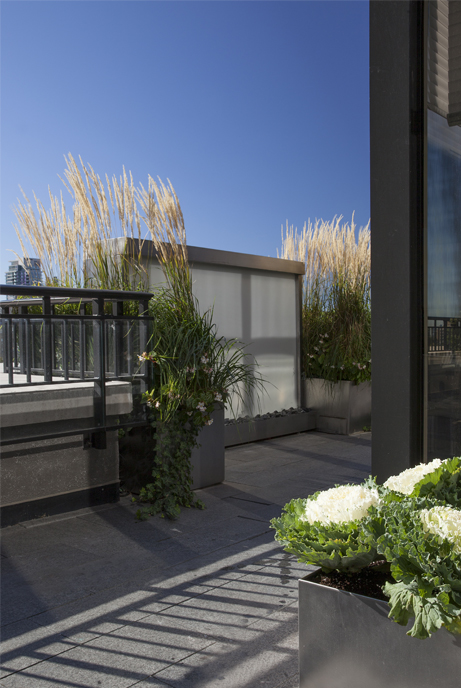
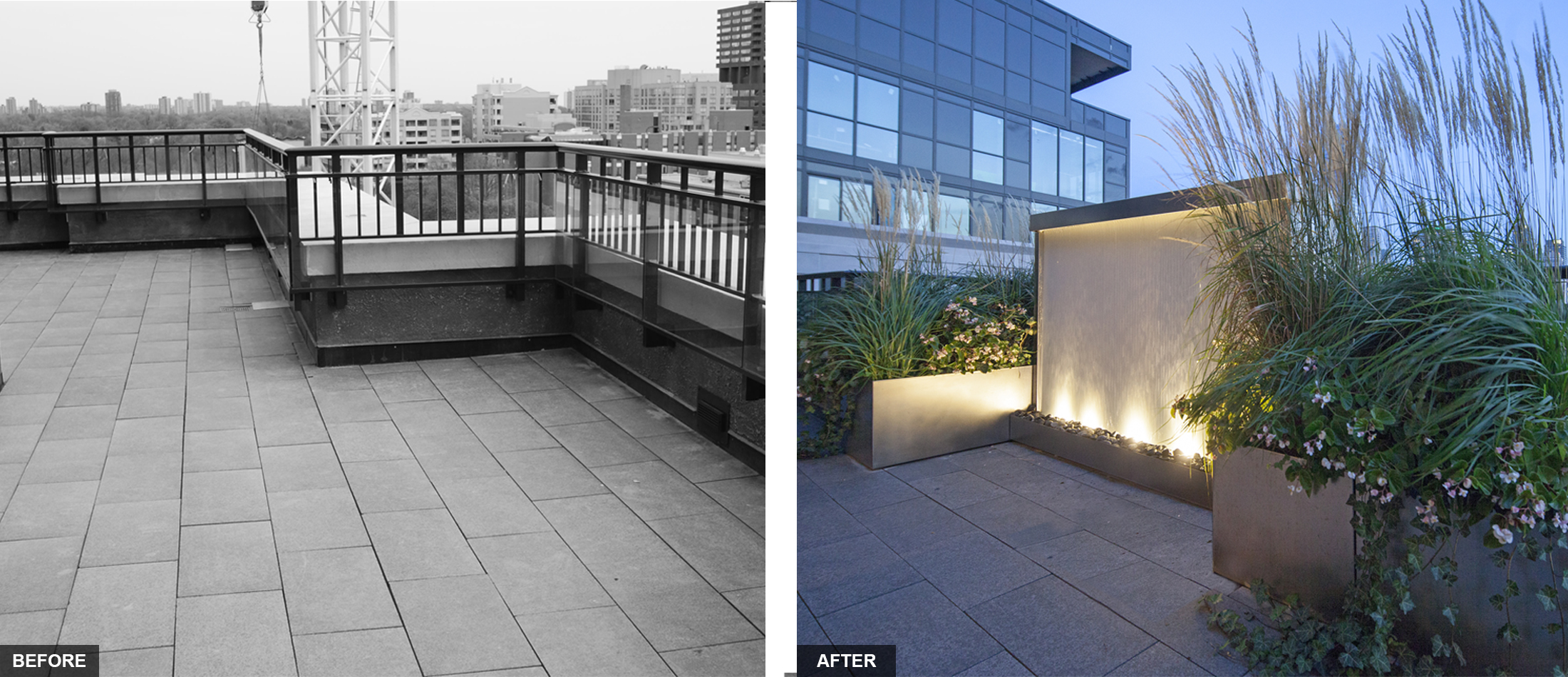
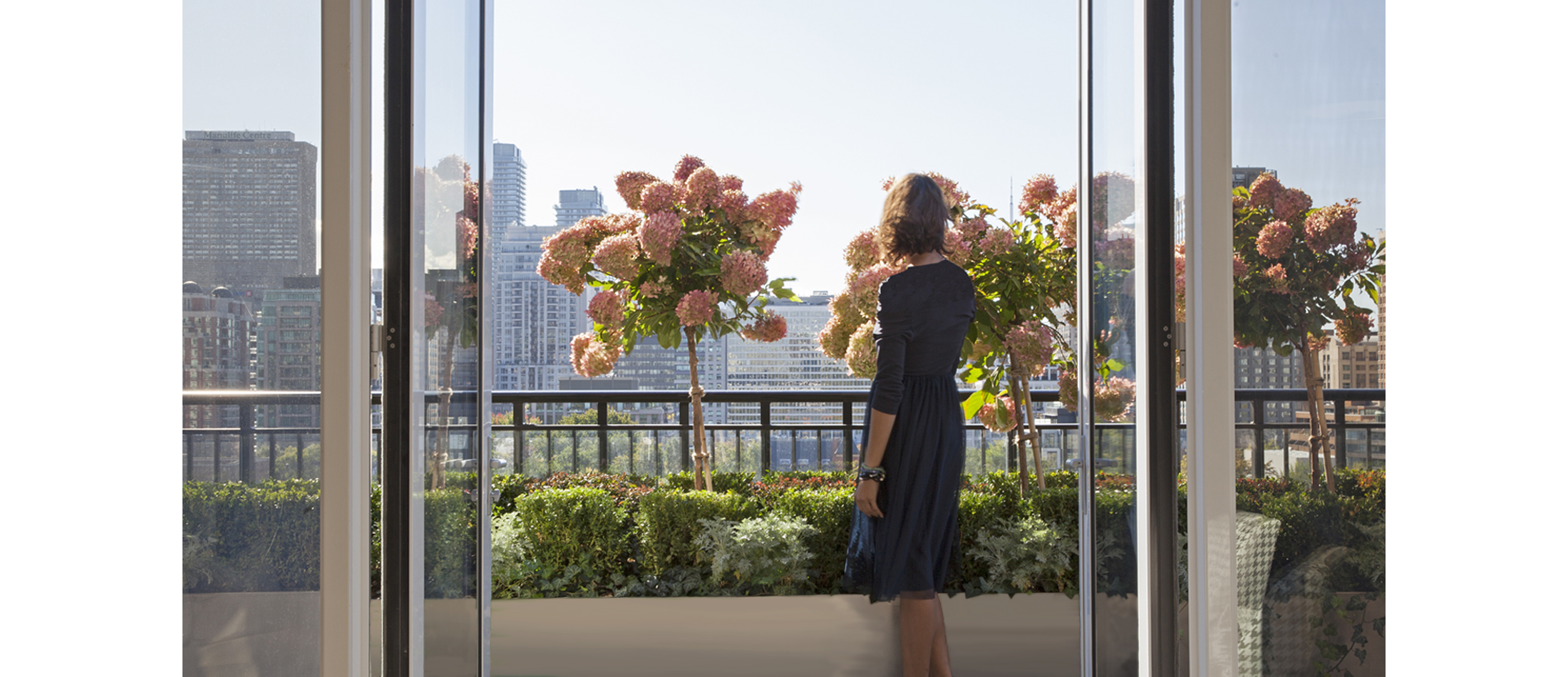
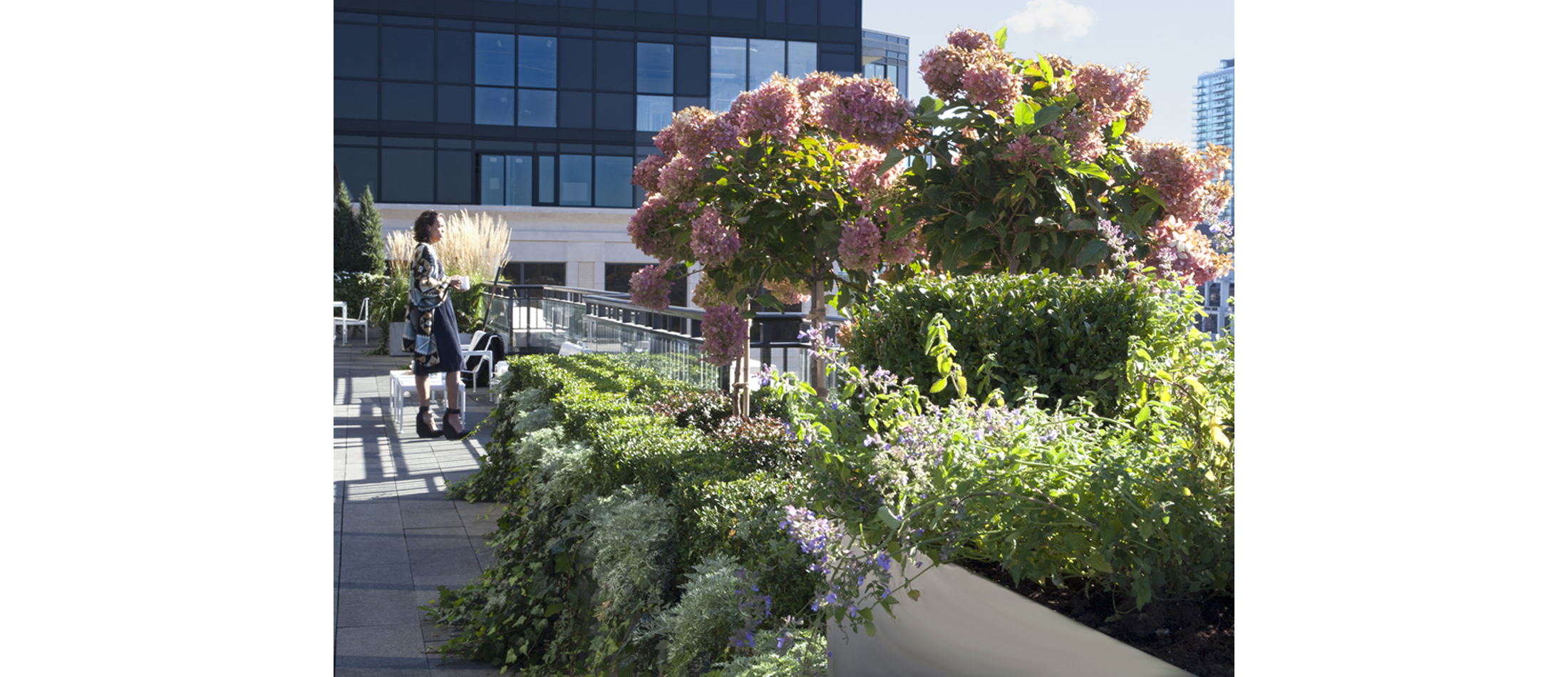
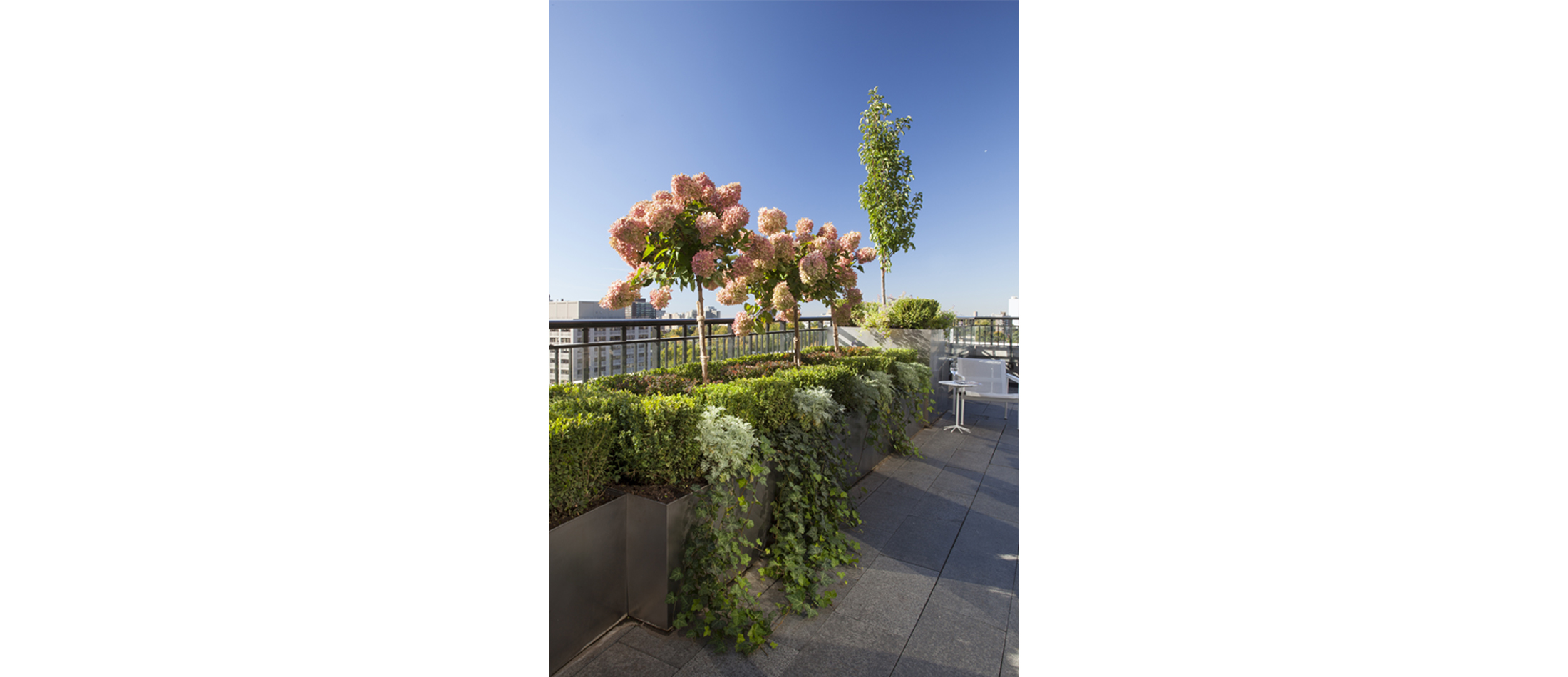
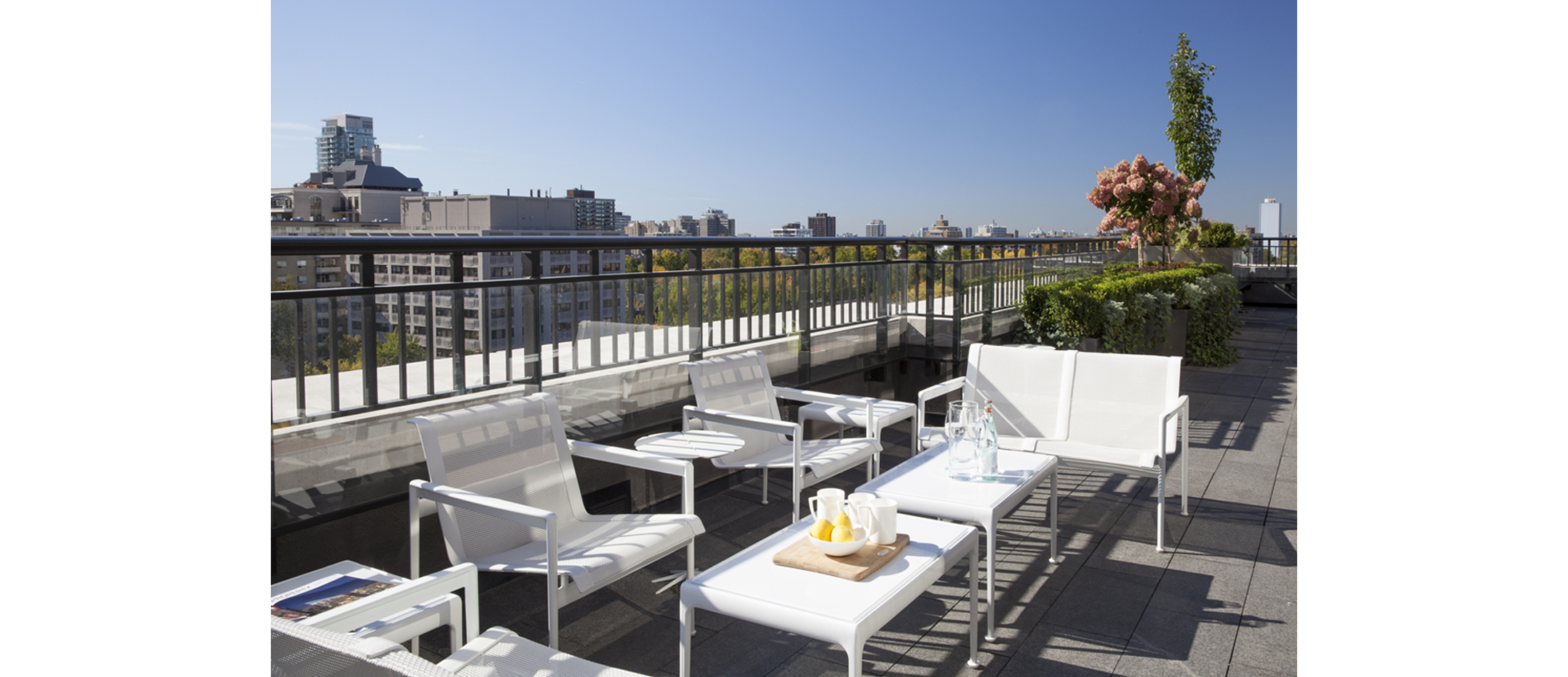
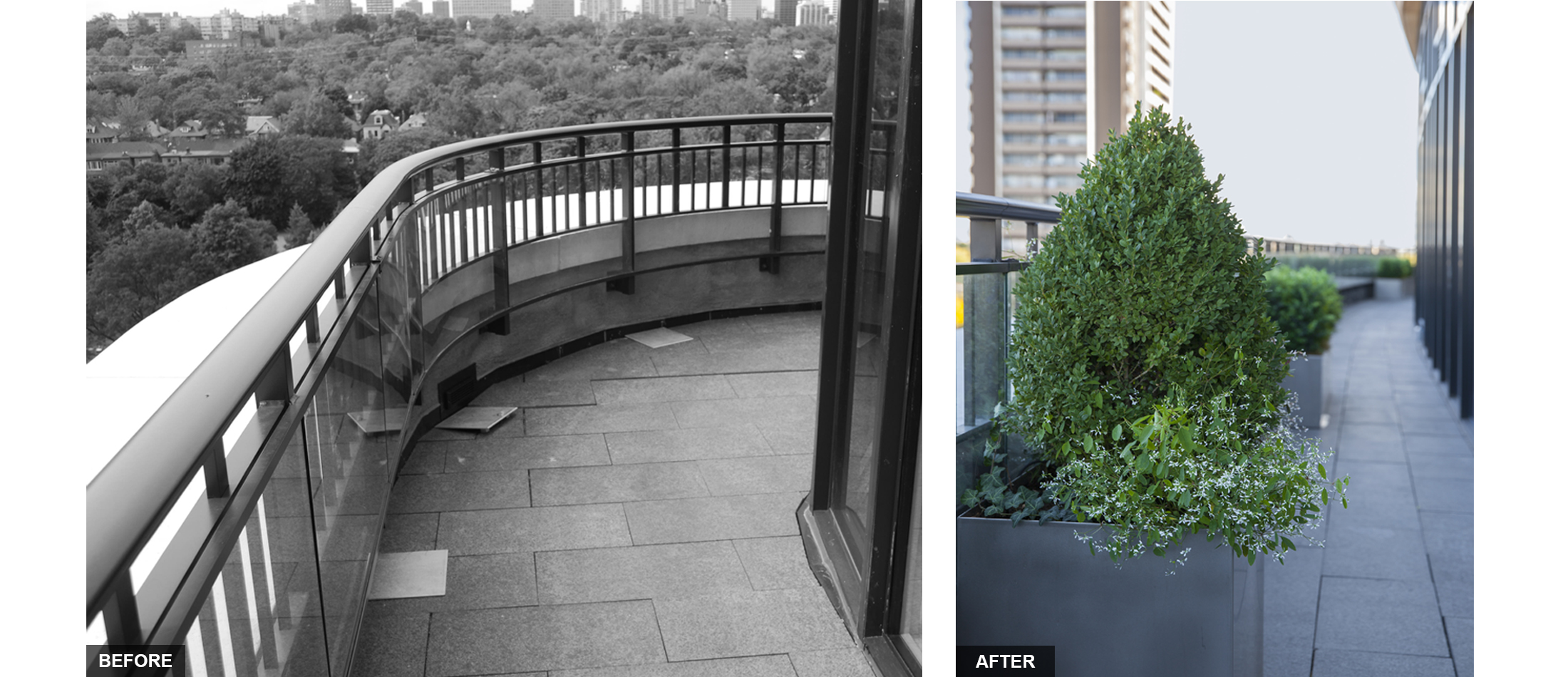
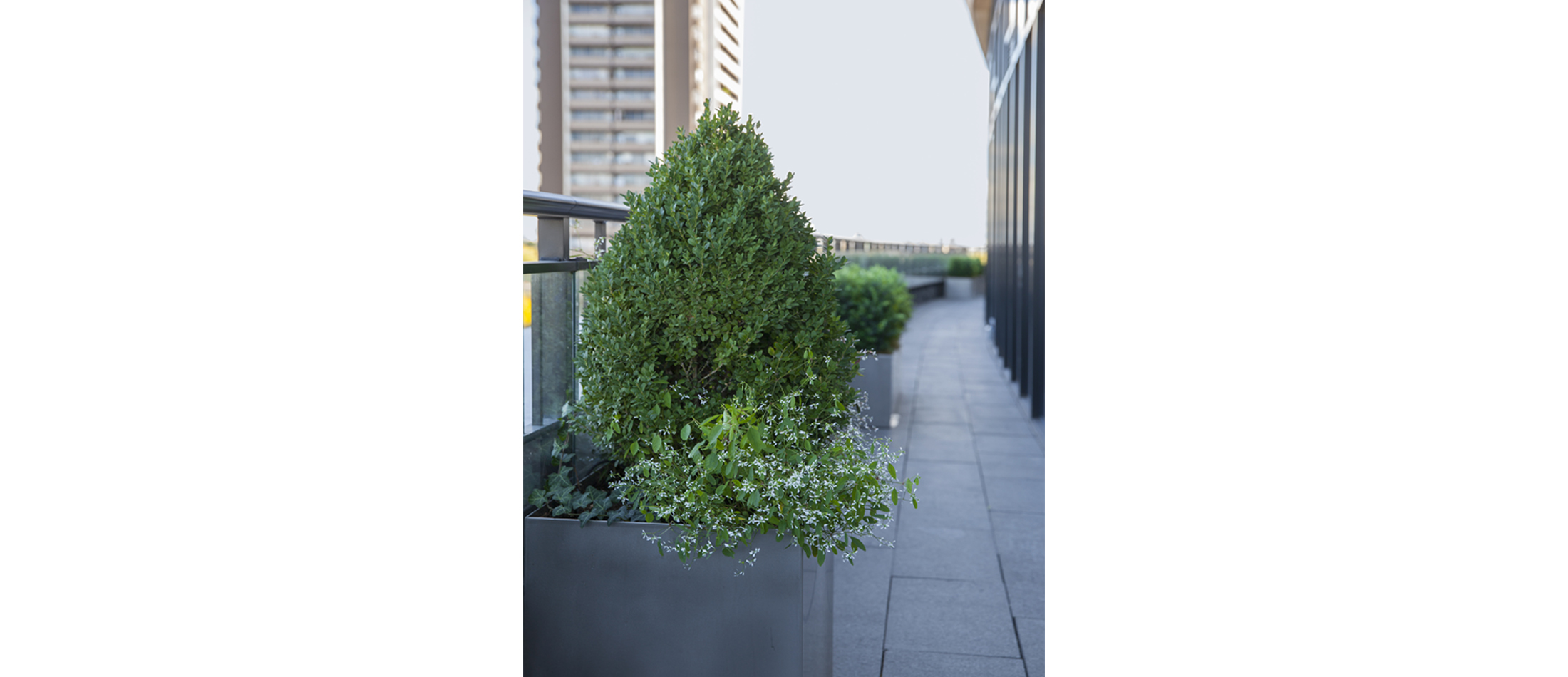
As the city high rise condos continue to dominate the skyline and people are further removed from the natural environment, garden terraces become more and more important. The client wanted to build a garden that was lush and filled with thriving plants that outlined filtered views to the city skyline.
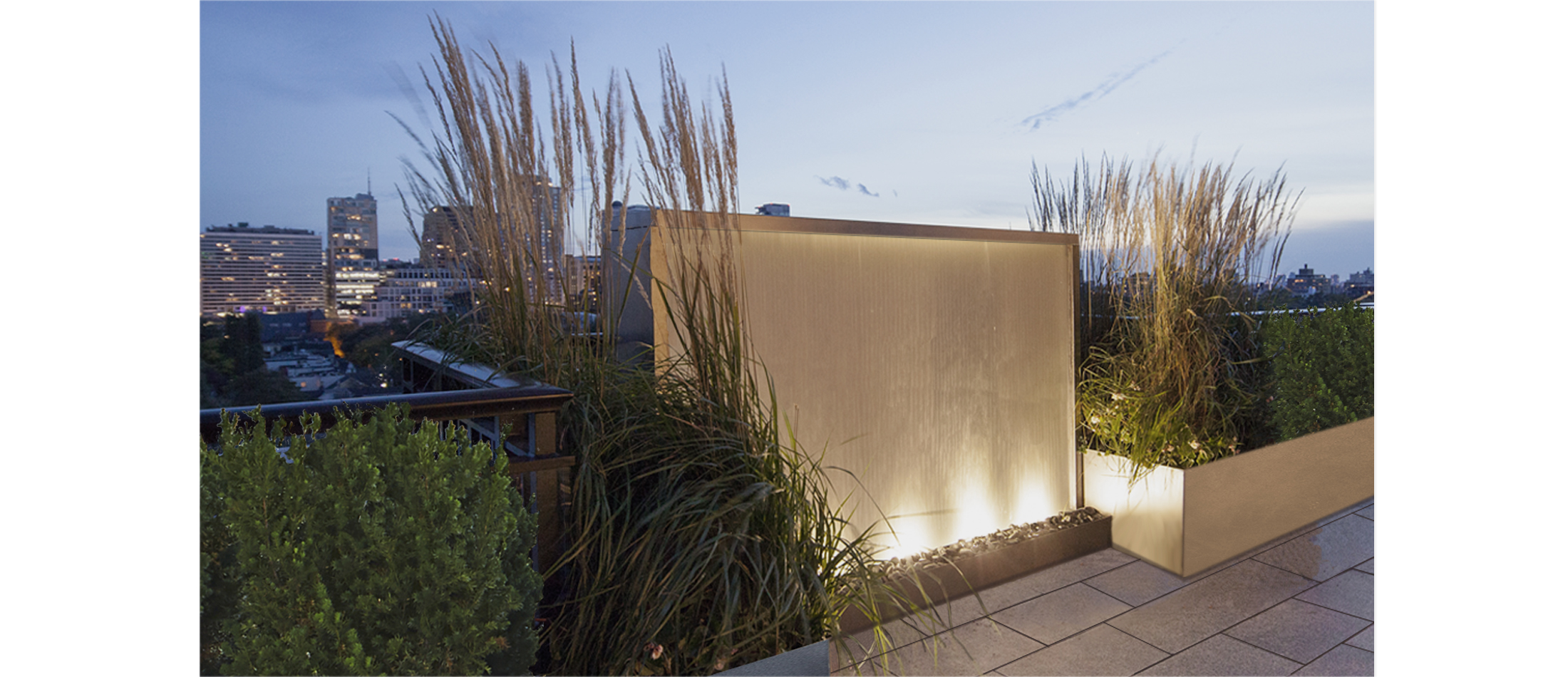
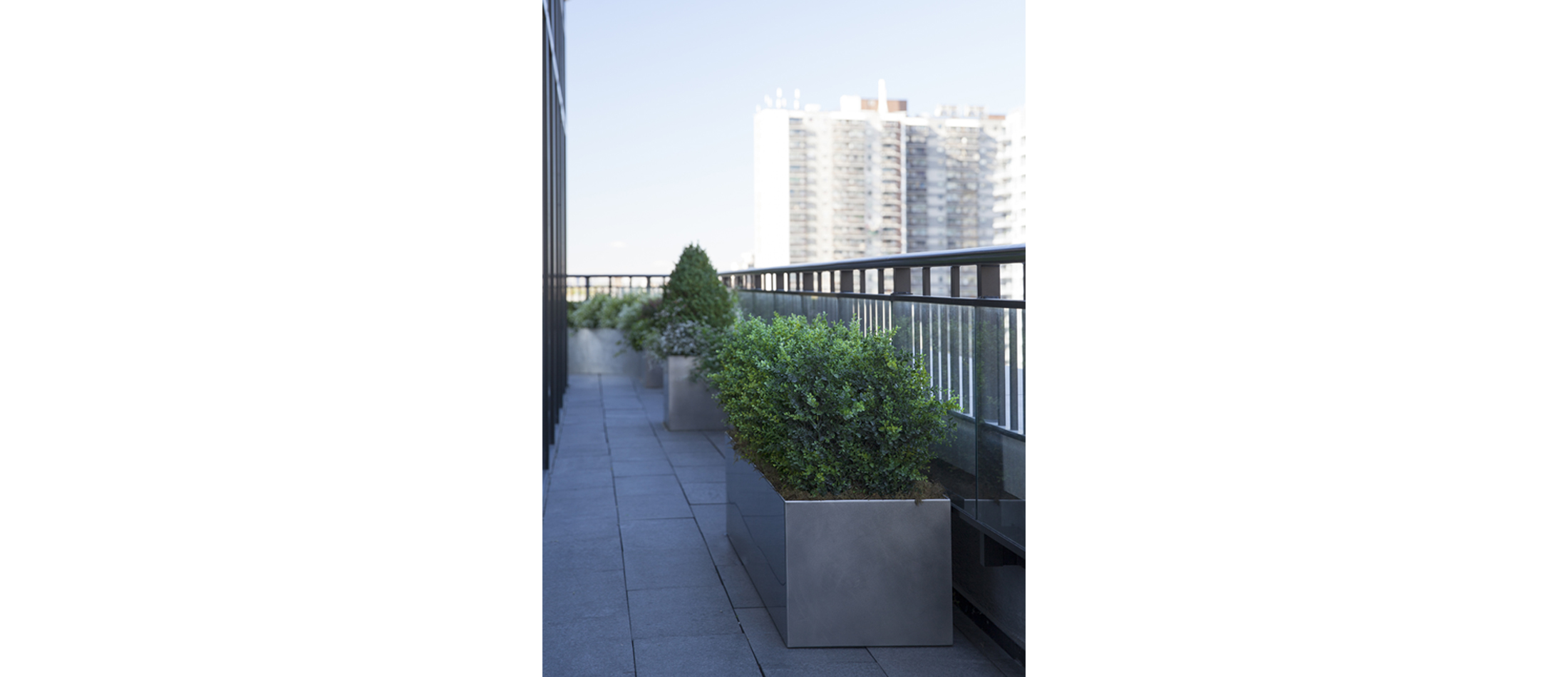
Stainless steel planters were fabricated to precisely fit the terrace that wrapped around the building. This created garden views of the skyline from each room of the apartment. The sounds of a water wall dampened the noise of the city and included a secondary natural element.
- Related Projects
+ Project Details
House as a Garden
+ GARDEN TERRACES AND BAMBOO COURTYARD
The clients were Inuit and contemporary art collectors. This became the inspiration for the design concept.
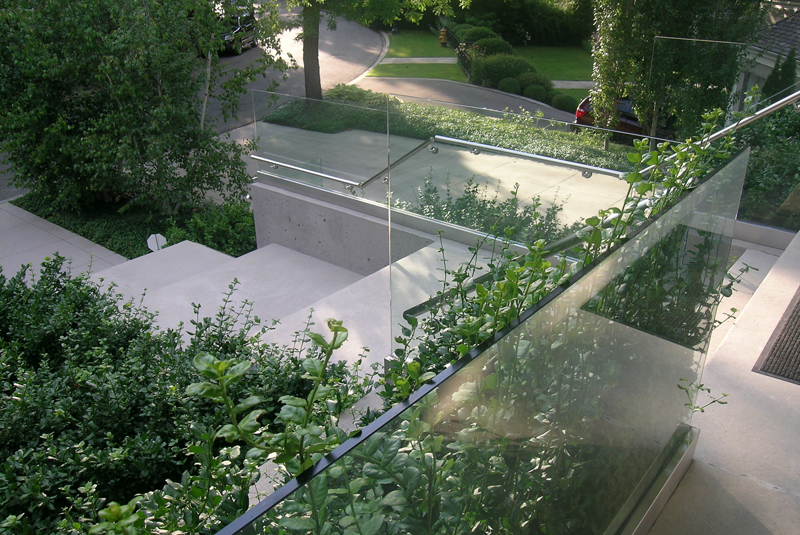
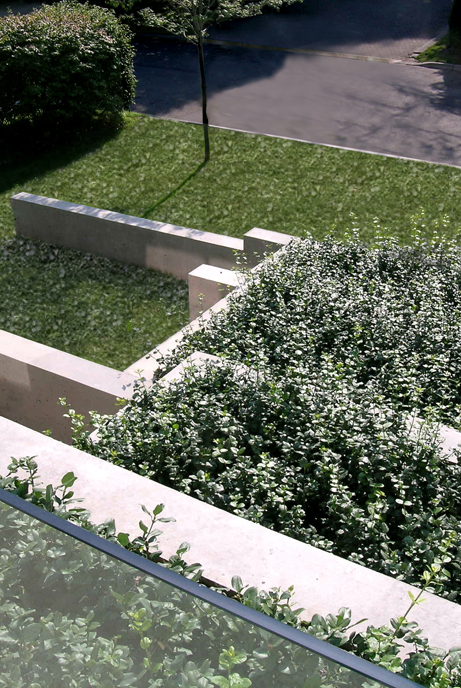
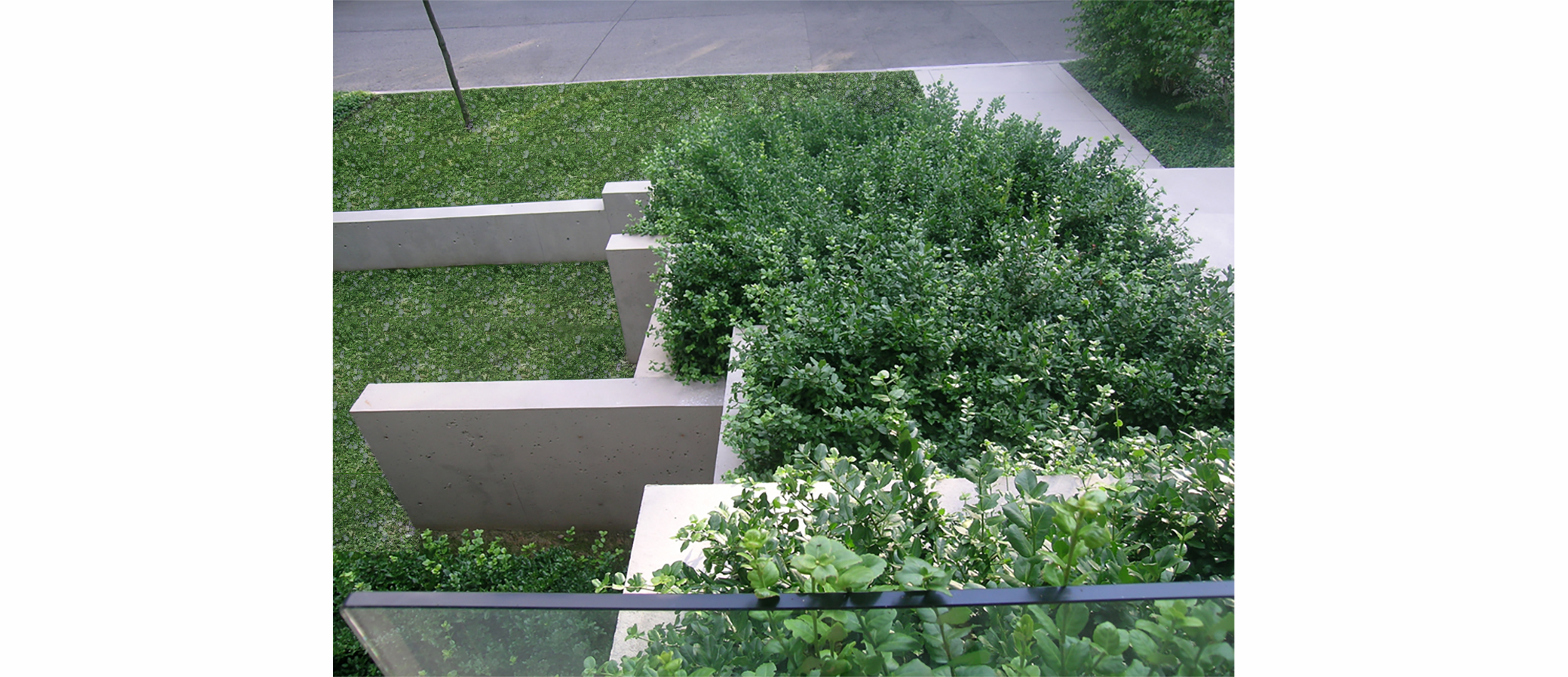
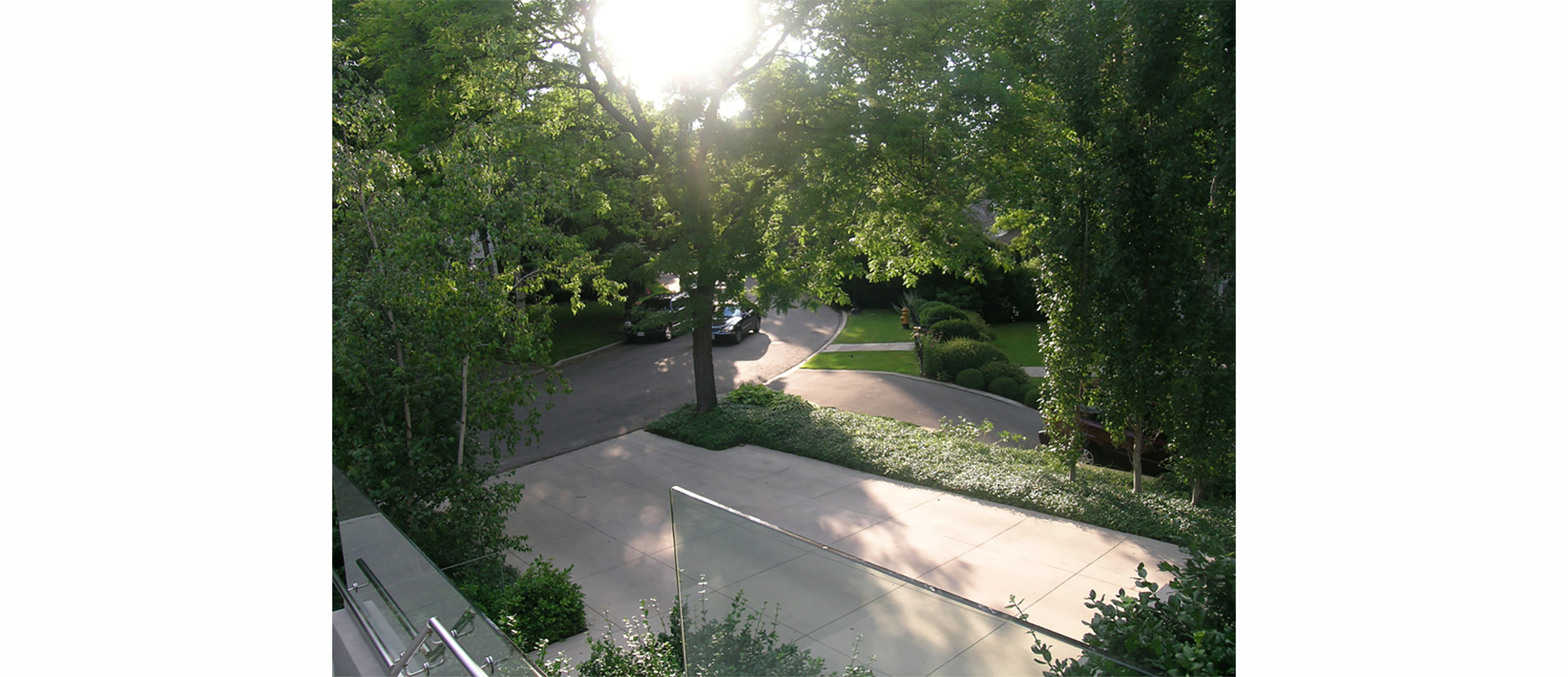
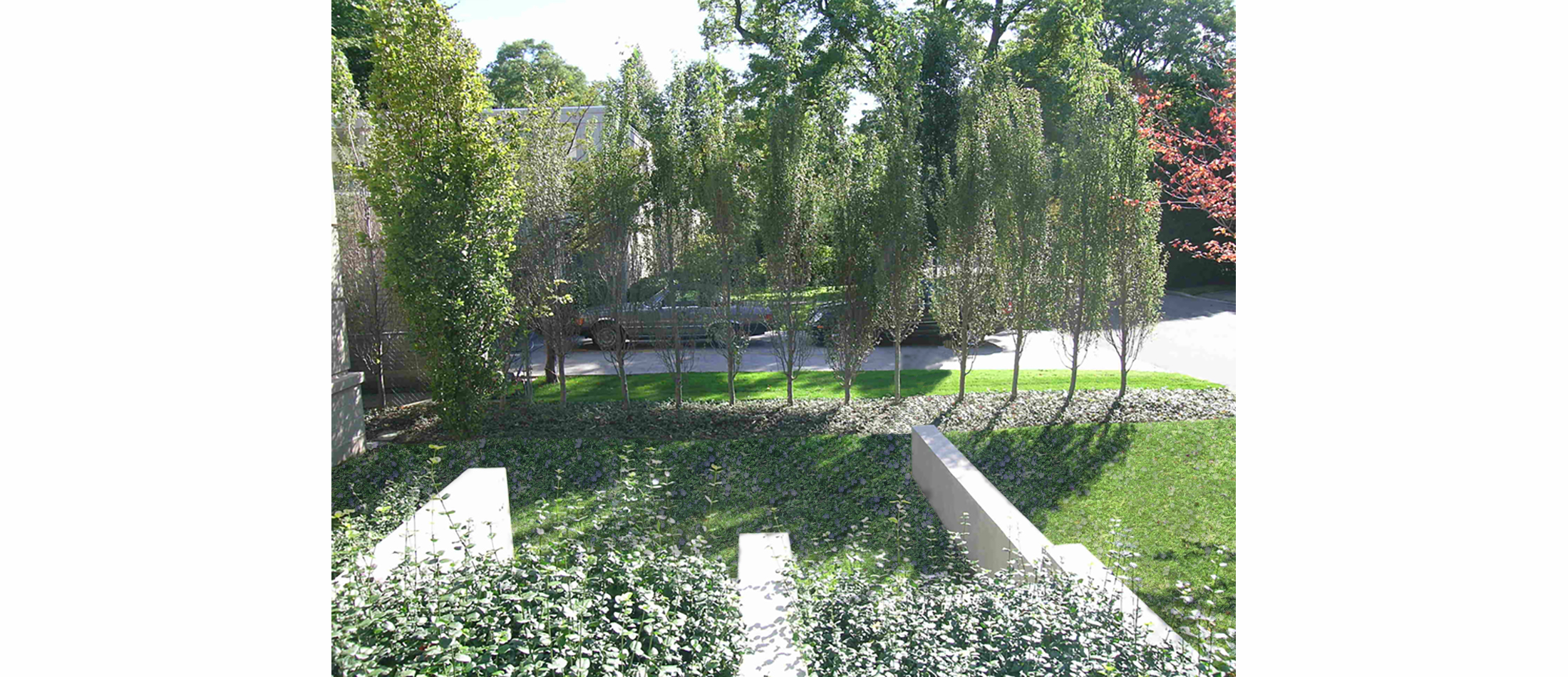
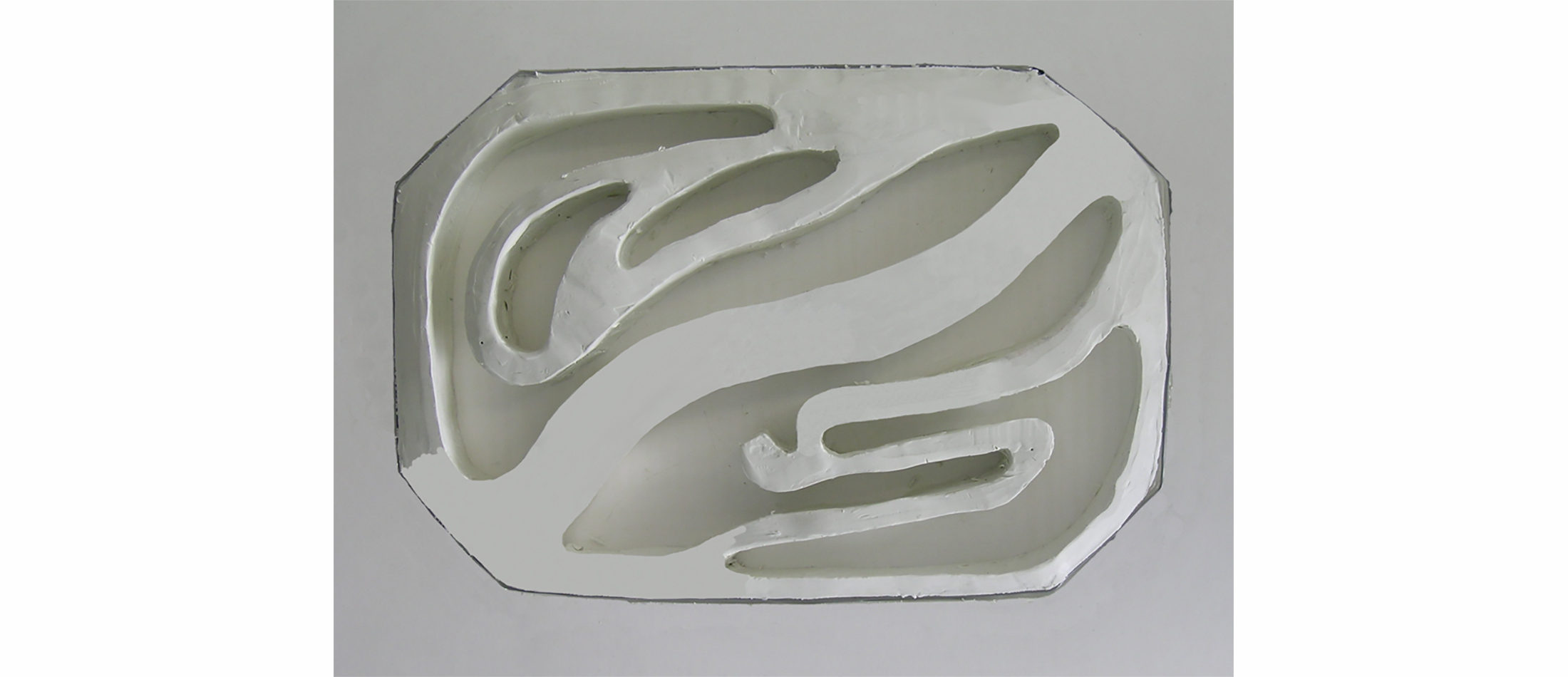
The front entrance to the house was situated at a high point and the resulting height seemed imposing as opposed to welcoming. In an effort to gently transition the house down to the landscape, concrete terraces inspired by Donald Judd’s minimalist sculpture, were designed to link up with the existing steps.
The plantings were chosen to emphasize the horizontal transition as a contrast to the height of the front door.
Birch clumps and a hedgerow of poplars reinforce the verticality so that the two planes (vertical and horizontal) create architectural balance and soften the stark texture of the concrete. The final result is a more welcoming sculptural entry.
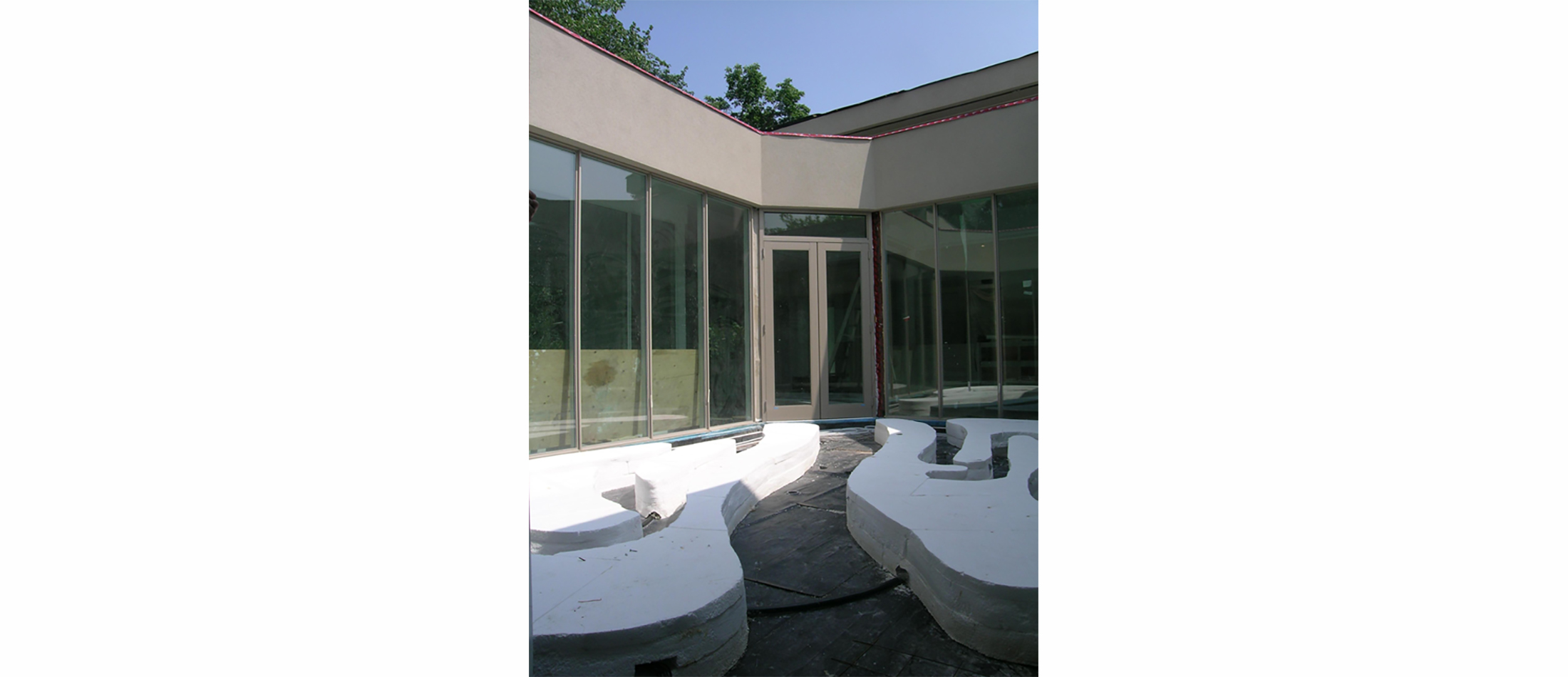
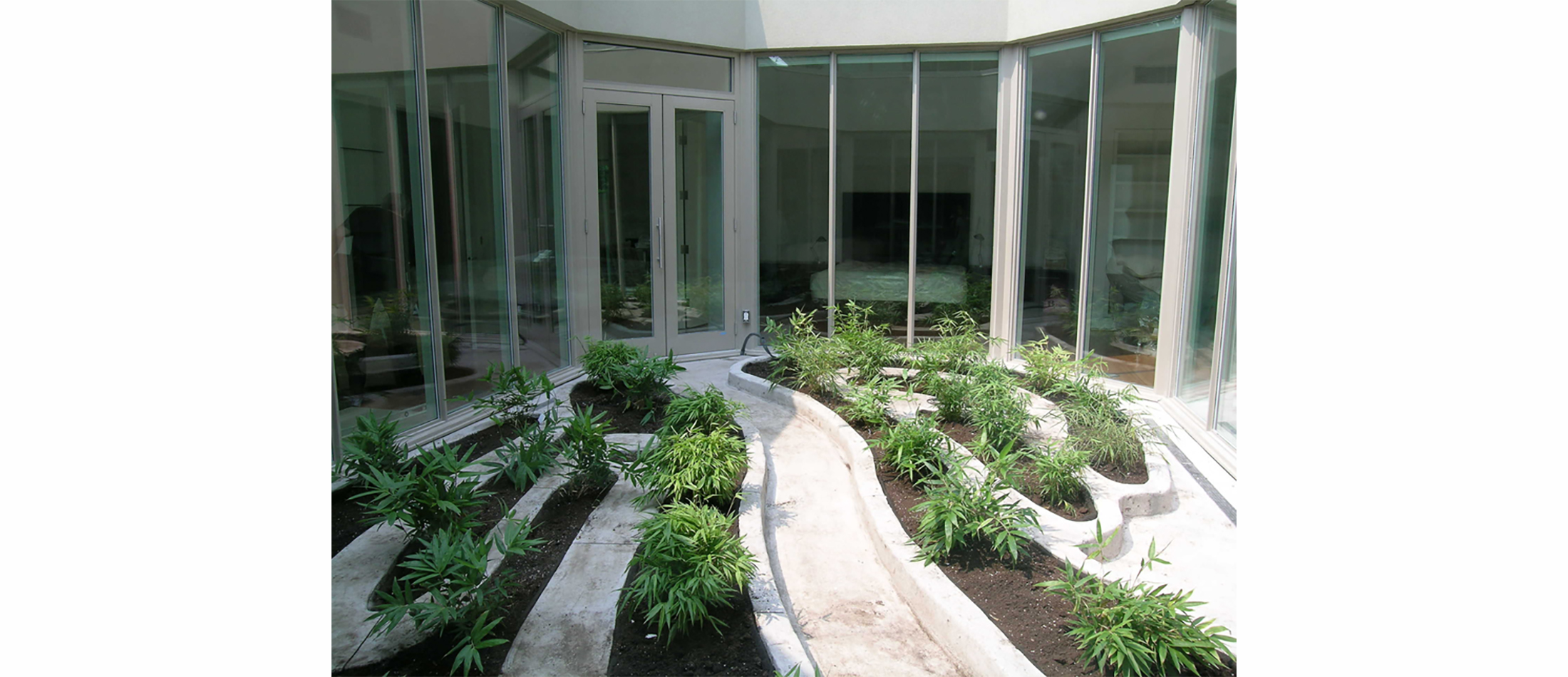
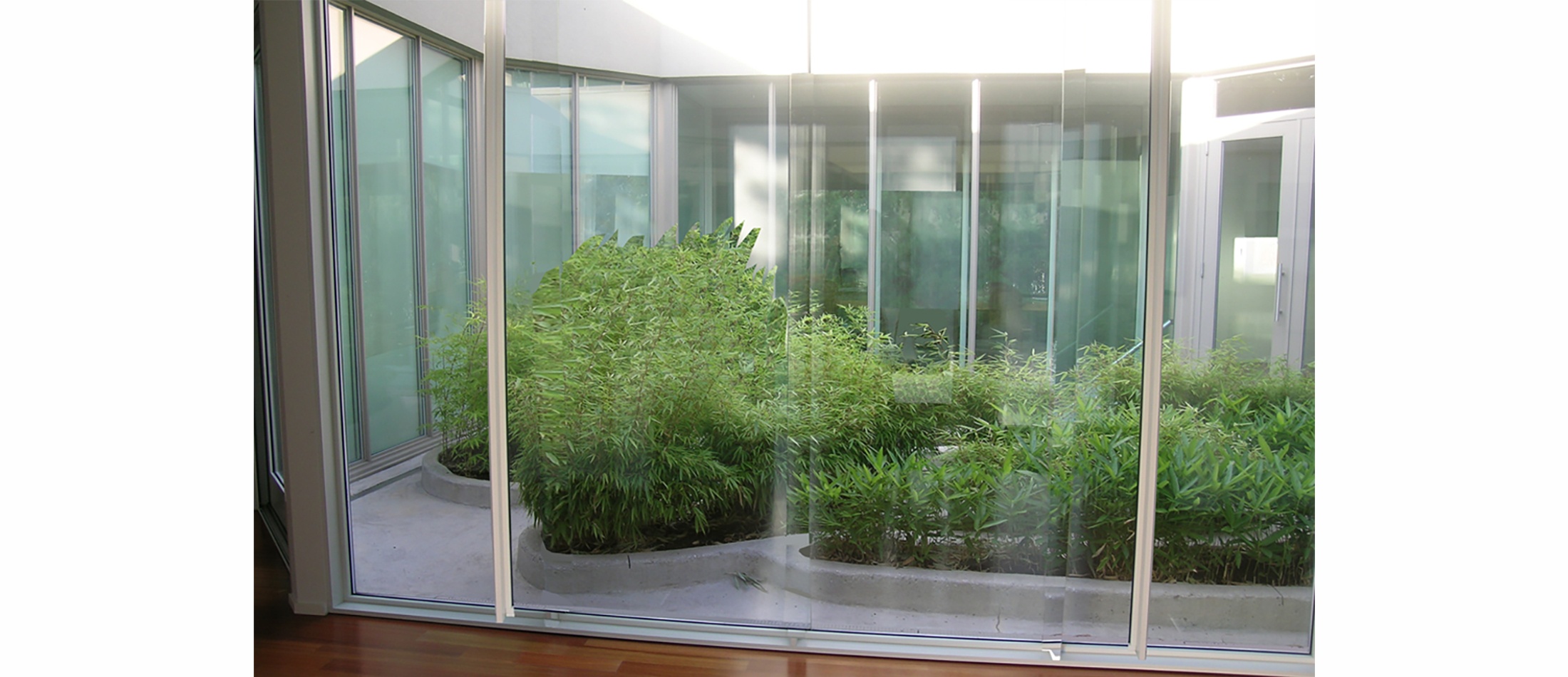
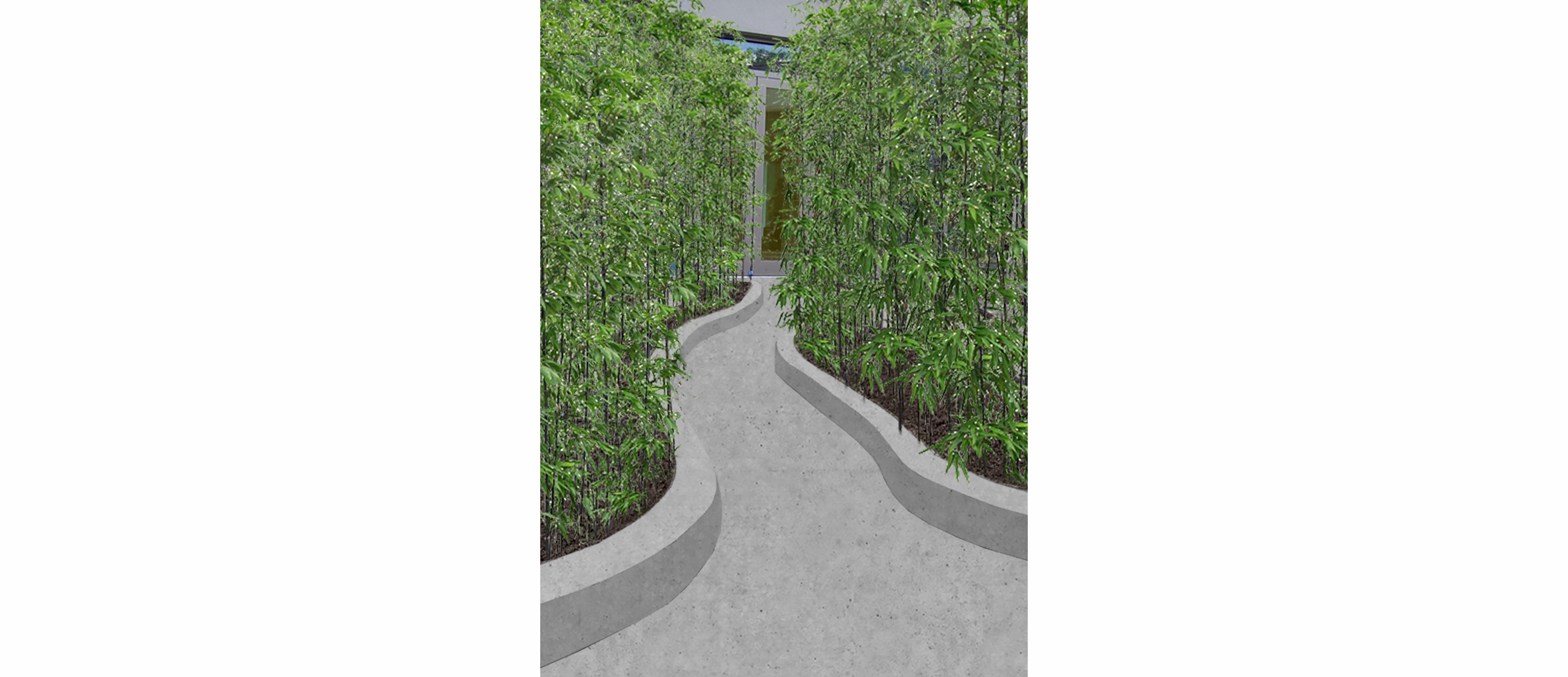
A central bamboo courtyard floods the interior with light and intertwines the outside and inside.

- Related Projects